The Putian Cluster Anatomy: A 2026 Field Guide for B2B Buyers Sourcing Sneakers From China's Most Misunderstood Manufacturing Hub
The Putian cluster produces an estimated 25% of China's athletic sneaker output and 60% of the country's counterfeit-branded sneakers — and the two facts are not separable. A B2B buyer who sources sneakers from Putian without understanding the 4-tier factory map and the 5 questions that distinguish a legitimate OBM factory from a replica-peddler will lose $7,000 to $35,000 per failed order, on average, before they understand what hit them. The cluster is not a region to avoid. It is a region to source from with a different protocol than any other footwear hub in China. This article is that protocol.
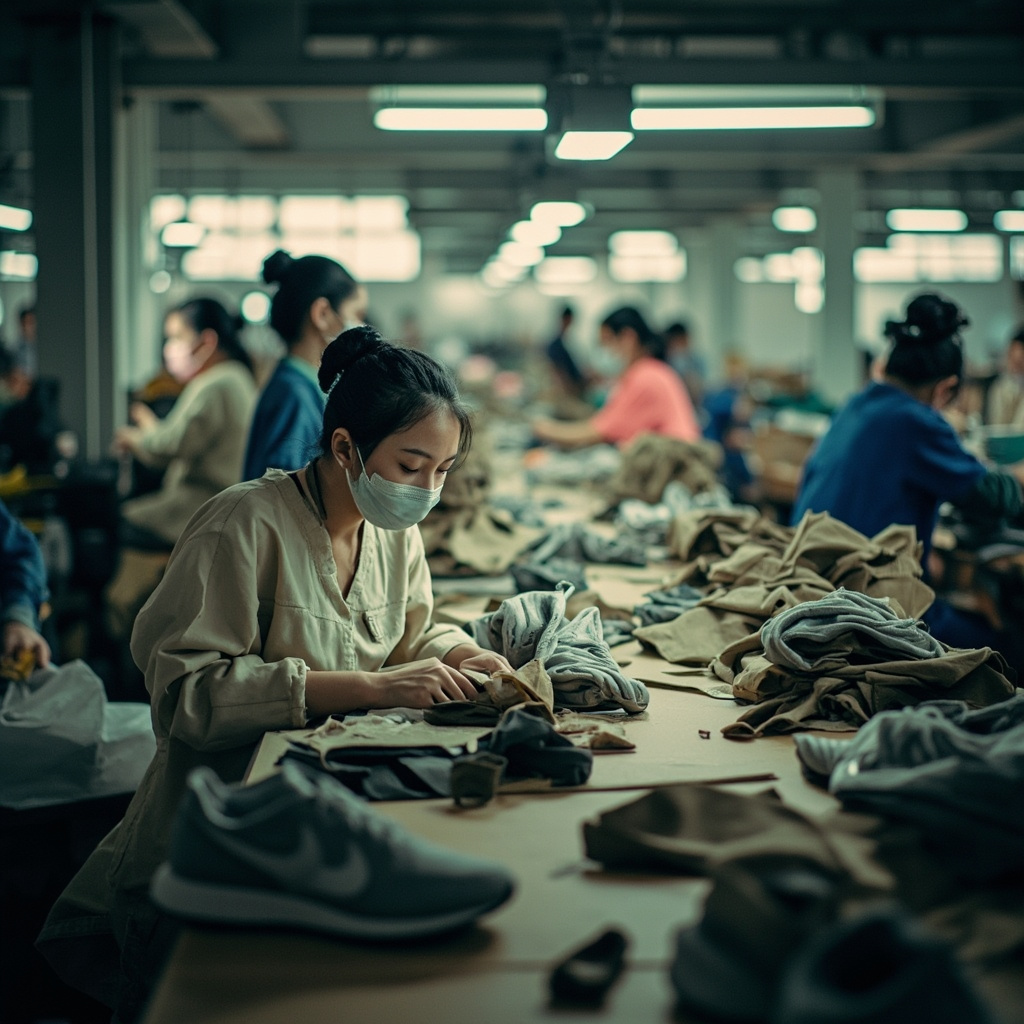
For B2B footwear buyers evaluating China as a sourcing origin, the Putian cluster occupies a uniquely contradictory position. It is simultaneously the lowest-cost, highest-capacity sneaker region in the country and the single largest source of intellectual property risk in the global footwear supply chain. The cluster's 200+ athletic and casual sneaker factories range from multi-line operations producing 8,000 pairs per day for foreign brands to small workshops of 30-50 workers still occasionally producing counterfeit branded product for the gray market. The 4-tier factory map that follows is the framework a B2B buyer needs to navigate this range without stumbling into the wrong tier.
What the Putian Cluster Actually Is in 2026
Putian is a prefecture-level city in Fujian Province, China, with a population of approximately 3.2 million. Within the city's administrative boundary, three districts — Licheng, Hanjiang, and Xiuyu — concentrate approximately 200-300 footwear manufacturing entities, ranging from large OEM factories to small workshop operations. The cluster's annual output, by industry estimates aggregated from China Leather Industry Association (CLIA) and Fujian Provincial Bureau of Statistics data, accounts for approximately 25% of China's athletic and casual sneaker production by pair count.
The cluster's reputation is inseparable from its history. Beginning in the 1980s, Putian became the global center of branded-sneaker replica production, an industry that at its peak in the early 2000s employed an estimated 200,000 workers across the cluster and generated billions of yuan in annual revenue. Following a series of enforcement actions beginning in 2015 — including the landmark Anxi Putian counterfeiting case that resulted in multi-year prison sentences for factory owners and trademark-violation fines exceeding ¥30 million — the legitimate portion of the cluster began a transition from pure OEM to OBM (original brand manufacturing) and ODM (original design manufacturing). The 2018-2020 trade war accelerated this shift by pushing export-oriented factories toward higher-value work.
The current state of the cluster is best understood as a stratified ecosystem of four distinct factory tiers, each with different capabilities, customer profiles, and risk profiles. A B2B buyer who does not map the cluster this way will receive quotes from across all four tiers and lack the framework to evaluate which quotes represent legitimate production capacity.
The 4-Tier Factory Map of the Putian Cluster
Tier 1: Certified OEM Factories (the 8-12% of the cluster you actually want)
Tier 1 factories in Putian are OEM operations producing for foreign brands under documented contracts. These factories are typically 800-2,500 workers, hold BSCI or SEDEX social compliance audits, operate with a documented quality management system (ISO 9001 minimum, often ISO/TS 16949 for technical footwear), and have a multi-year relationship with at least one Western brand that conducts regular on-site audits. Examples of companies at this tier include the Putian-based operations of major Taiwanese footwear groups and the upper-end of the local ANTA/XTEP/361° supply chain (those factories supply their own branded production, not just replicas).
Tier 1 factories quote FOB prices in the $11-19 range for an athletic sneaker at 1,000-3,000 pair MOQ, with tooling and material sourcing handled in-house. They typically require a 30/70 payment term (30% T/T deposit, 70% against B/L copy), 60-75 day production lead time from PO confirmation, and a documented bill of materials with original material certifications. The defect rate at pre-shipment inspection (AQL 2.5 standard) is typically 1-2%, and the factory maintains a finished-goods warranty of 90 days.
Tier 2: OBM/ODM Converters (the 25-30% that requires care)
Tier 2 factories are former OEM or replica operations that have transitioned to producing under their own brand or under a buyer's ODM specification. These factories are typically 200-800 workers, may or may not hold a current social compliance audit (many carried BSCI in the 2017-2019 period and have allowed it to lapse), and have ambiguous production histories. A factory at this tier may have produced legitimate branded product in 2022 and gray-market product in 2023, with the same production lines.
Tier 2 factories quote FOB prices in the $7-14 range for an athletic sneaker at 800-1,500 pair MOQ. They are typically willing to accept lower MOQs (300-500 pair orders) than Tier 1 factories, which is the source of their appeal to first-time B2B buyers. The risk profile is correspondingly higher: defect rates at AQL 2.5 are typically 3-5%, lead times are 45-60 days, and the documentation quality (test reports, material certifications, social compliance) is inconsistent. Approximately 60% of these factories will pass a Tier 1-grade pre-shipment inspection on a first order; approximately 30% will pass a second order under the same specification.
Tier 3: Hybrid OEM/Subcontractor Operations (the 35-40% to avoid for first orders)
Tier 3 factories are operationally opaque. They may present as 500-worker operations but actually run 80-150 workers in-house and subcontract overflow to 3-5 smaller workshops in the surrounding townships. The first sample is produced in-house; the bulk order may be split across 2-3 subcontractors, with quality varying by batch. These factories quote aggressively — typically 10-20% below the Tier 2 median — and accept low MOQs (200-500 pairs) precisely because their variable cost structure is so low.
The risk of working with a Tier 3 factory on a first order is substantial. The defect rate at AQL 2.5 inspection is typically 6-10%, the variance between the sample and the bulk order is significant (3-5% of the order will be visibly different from the approved sample), and the recovery path is limited because the factory does not own the full production process. A 2024 industry survey by the Fujian Footwear Association found that 68% of first-time B2B buyers who sourced from a Tier 3 Putian factory experienced a quality failure within the first three orders, compared to 18% for Tier 2 and 6% for Tier 1.
Tier 4: Replica-Peddling Workshops (the 20-30% of the cluster that should be excluded)
Tier 4 factories are the surviving replica operations and the small workshops that feed them with components, lasts, and finishing work. A buyer who approaches one of these factories directly, or who is redirected to one through a trading company, will receive a quote that is 30-50% below any other quote in the cluster. The product will arrive either as outright counterfeit branded merchandise (illegal to import in virtually all Western jurisdictions) or as a close-copy that triggers customs seizure under the trademark-holder's border enforcement program.
The exposure of working with a Tier 4 factory is not just the loss of the order value. It includes the customs seizure, the potential criminal referral to U.S. Customs and Border Protection's IPR (intellectual property rights) program or the European Union's Anti-Counterfeiting Blocklist, the brand-dilution impact on the buyer's reputation if the seizure is publicized, and the permanent loss of the buyer's import privileges if the violation is severe enough. The first-time B2B buyer's expected loss from a Tier 4 transaction ranges from $15,000 to $80,000 per shipment, depending on shipment size and the buyer's import history.
The 5 Sourcing Questions That Expose a Tier 3 or Tier 4 Factory
The following questions are designed to be asked in the first video call with a prospective Putian factory. They are not yes/no questions — they require the factory representative to describe a specific process or to produce specific documentation. A factory at Tier 1 or 2 will answer all five without hesitation. A factory at Tier 3 or 4 will fail at least two of the five, and the failure pattern is diagnostic.
1. "Show me your current BSCI or SEDEX audit report, and tell me the most recent audit date and the audit firm's name." A legitimate Tier 1 factory will have a current audit (within 12 months) from a recognized firm (amfori BSCI, SGS, Bureau Veritas, Intertek, QIMA, or similar). A Tier 2 factory will have an audit that is between 18-36 months old and may be unable to produce the most recent follow-up report. A Tier 3 or 4 factory will have no current audit and will claim that the buyer can "arrange the audit after the first order." This is the most reliable single indicator of cluster tier.
2. "Walk me through which production lines will produce my order, and how many pairs per day can each line produce." A Tier 1 factory will name 2-3 specific lines, give you daily production output (e.g., "Line A produces 600 pairs per day, Line B produces 800 pairs per day, Line C is reserved for our [named brand] customer"), and confirm the line assignment in writing. A Tier 2 factory will give a more general answer ("we have several lines") but will commit to a specific line in the PO. A Tier 3 factory will not commit to a specific line — this is the diagnostic that reveals the subcontractor model. A Tier 4 factory will refuse to discuss production lines at all.
3. "Can you provide a bill of materials (BOM) for this SKU, with material grade and supplier origin for each component, signed by your production director?" A Tier 1 factory will produce a detailed BOM within 24-48 hours, including material grade (e.g., "mesh: 180 GSM polyester, supplier: [named], origin: Fujian"), with a signature. A Tier 2 factory will produce a BOM but it will be less detailed and may have generic entries. A Tier 3 or 4 factory will resist signing a detailed BOM because doing so locks them into a specification that they cannot guarantee through the subcontractor network.
4. "What is your standard pre-shipment inspection protocol, and what AQL standard do you apply?" A Tier 1 factory will answer with specific AQL levels (typically 2.5 for general defects, 1.5 for critical defects) and offer the buyer the option of being present or hiring a third-party inspection firm. A Tier 2 factory will give a similar answer but may push back on buyer presence. A Tier 3 factory will use a less rigorous standard (e.g., "we inspect 10% of the order") or will be vague about the AQL level. A Tier 4 factory will not have a documented inspection protocol.
5. "Show me the B/L (bill of lading) for the most recent order you shipped to a buyer in [the buyer's country]." This is the most aggressive question and is appropriate for second-call conversations. A Tier 1 factory will produce a redacted B/L within 24 hours and may offer an introduction to the buyer's quality team. A Tier 2 factory will hesitate but may produce a partial record. A Tier 3 or 4 factory will refuse or will produce documentation that does not match the claimed customer portfolio. The B/L is a falsifiable document — it names a specific shipper, a specific consignee, a specific vessel, and a specific date. No factory can bluff through a request to produce one.
Price and MOQ Bands Across the Putian Sub-Regions
The Putian cluster is not a single pricing region. The three production districts have meaningfully different cost structures, capacity profiles, and customer bases. The table below summarizes 2026 FOB ranges for an athletic sneaker (running shoe construction) at the standard 1,000-pair MOQ, with material specifications held constant.
| Sub-Region | FOB Range (USD/pair) | Typical MOQ | Tier Mix | Lead Time (days) |
|---|---|---|---|---|
| Licheng (central Putian) | $11.50 – $17.50 | 1,000-2,500 | Tier 1 dominant (60%) | 55-70 |
| Hanjiang (coastal) | $8.00 – $13.50 | 500-1,200 | Tier 2 heavy (55%) | 50-65 |
| Xiuyu (inland) | $6.50 – $11.00 | 300-800 | Tier 3-4 risk (50%) | 45-60 |
The $5-6 per pair differential between Licheng and Xiuyu at the same MOQ is the central financial temptation of sourcing from the Putian cluster. It is also the source of most first-time B2B buyer failures. The lower price in Xiuyu reflects two things: a lower material grade (the typical Xiuyu quote is for a mesh upper with 140-160 GSM vs. the 180-200 GSM used in Licheng Tier 1 production) and a higher subcontractor dependency. A buyer who sources a 1,000-pair order at $7.50/pair in Xiuyu to save $4,000 on landed cost will typically lose $12,000-$25,000 in quality failures, rework, and brand damage on the first order alone.
The more rational sourcing strategy is to pay the Licheng premium for Tier 1 production (FOB $14-17) and use the savings to fund a third-party pre-shipment inspection ($300-500 per inspection). The total cost of this strategy is approximately $14.50-17.80 per pair, with a 90%+ probability of meeting the buyer's quality specification on the first order. The Xiuyu discount strategy is approximately $7.50-9.00 per pair on paper but $12-25 per pair in expected total cost of ownership when quality failures are included.
The Compliance Reality: BSCI, SEDEX, and the Audit Gap
Social compliance in the Putian cluster is improving but remains uneven. As of mid-2026, industry estimates indicate that approximately 35% of the cluster's Tier 1 factories hold a current (within 12 months) BSCI or SEDEX audit, compared to approximately 12% of Tier 2 factories and under 3% of Tier 3 factories. Tier 4 factories do not participate in any social compliance regime.
The most common compliance failures in the cluster (in descending frequency, per a 2024 review of 200 Putian facility audit reports conducted by the Fujian Chamber of Commerce for Footwear Export) are: working hours exceeding 60 hours per week during peak production (58% of audited facilities), inadequate dormitory conditions for migrant worker housing (47%), wage documentation gaps (32%), and inadequate chemical handling for adhesives and solvents (24%). The first two are the most common reasons for an audit failure that results in a buyer's relationship termination.
The cost of a current BSCI or SEDEX audit for a Putian factory ranges from $2,200 to $4,800, depending on the audit firm and the factory size. This is a small fraction of the cost of a failed second order ($50,000-$120,000 in lost materials, replacement factory search, and retail margin), but it is also a non-trivial expense for a Tier 2 or 3 factory. A factory that has allowed its audit to lapse is signaling either financial strain or a production pivot toward buyers who do not require the audit. Both signals warrant caution.
Lead Times, Capacity, and the 2026 Production Calendar
The Putian cluster follows a predictable production cycle. The peak season runs from March through August, during which Tier 1 factories are at 95-100% capacity utilization. The off-peak season runs from September through February, with utilization dropping to 65-80%. New B2B buyers who place first orders during the peak season encounter 60-75 day lead times that often stretch to 90 days. First orders placed during the off-peak season typically deliver in 45-60 days.
The most important calendar variable for a first-time B2B buyer is the Chinese New Year shutdown, which in 2026 falls in the third week of February. Factories typically wind down production 7-10 days before New Year and resume 10-14 days after. An order placed in mid-January for March delivery will almost certainly miss the date by 3-4 weeks. An order placed in late February for May delivery will deliver on time. The first-time B2B buyer's best entry window is October through December — the cluster's off-peak — when factory attention is available, lead times are predictable, and capacity can be reserved before the spring rush.
The capacity of Tier 1 factories in Putian ranges from 4,000 to 12,000 pairs per day across all production lines. A 1,000-pair order is a small percentage of any Tier 1 factory's daily output and will not be deprioritized. A 1,000-pair order at a Tier 3 factory may represent 5-8% of the in-house capacity, but 30-50% of the subcontractor capacity needed to complete it — and this is the operational reason that Tier 3 orders fail. The subcontractor network is sized for small overflow work, not for absorbing a major buyer's primary production.
The 3 Red Flags That Should End a Putian Sourcing Conversation
Three specific red flags indicate that a prospective Putian factory is not operating at the tier claimed by the sales representative. Any one of these is sufficient to end the conversation; two of three is grounds for reporting the factory to industry databases.
Red flag 1: The factory has a working sample of the buyer's product within 5 business days, with full materials. A legitimate factory at 1,000-pair MOQ requires 10-15 business days to develop a first sample with material sourcing, even for a simple athletic construction. A factory that can deliver a fully-materialized sample in 5 business days is sourcing components from a third party (likely a replica operation that already has the materials on hand) or is using a generic last and substitute materials that will not match the bulk order.
Red flag 2: The factory declines to provide the buyer's requested material certification in writing. A legitimate factory can produce material certifications (leather grade, mesh GSM, outsole rubber shore hardness, midsole density) within 48 hours of the request. A factory that defers ("we will provide after the first order") or that provides a generic document not tied to the specific material lot is signaling that the material will be substituted at production time.
Red flag 3: The factory quote is 25% or more below the median of comparable quotes. The market-clearing FOB price for an athletic sneaker in the Putian cluster at 1,000-pair MOQ in mid-2026 is approximately $13-15 per pair. A quote below $10 per pair at this MOQ is either: (a) for a significantly different product than the specification, (b) from a factory that will substitute materials at production, or (c) from a factory that will not complete the order at the quoted price and will demand supplemental payment mid-production. All three outcomes are documented in the industry survey data referenced in the earlier section.
The Bottom Line: When to Source From Putian, and When to Walk Away
The Putian cluster is a legitimate, high-capacity, cost-competitive sourcing region for athletic and casual sneakers. It is also the single highest-risk region for first-time B2B buyers, because the gap between the cluster's best factories (Tier 1, FOB $14-17, 6% first-order failure rate) and worst (Tier 4, FOB $5-8, 80%+ failure rate plus customs risk) is wider than in any other Chinese footwear cluster. The Guangdong cluster has tighter quality bands and higher FOB prices. The Wenzhou cluster specializes in leather footwear rather than sneakers. The Jinjiang cluster (which is adjacent to Putian and often confused with it) has fewer counterfeit risk issues but is dominated by the brand-owned operations of ANTA, XTEP, 361°, and Peak, leaving less capacity for foreign-brand OEM work.
The Putian cluster should be on a B2B buyer's short list when the product is athletic or casual sneakers, the target FOB is below $18 per pair, the buyer can sustain 60-90 day lead times, and the buyer has the compliance infrastructure to verify Tier 1 status. The cluster should be off the list when the product is anything other than sneakers, when the buyer's first order is below 800 pairs (below the minimum that Tier 1 factories will accept), or when the buyer cannot conduct a third-party pre-shipment inspection.
The cluster's reputation will continue to evolve. The 2015-2020 enforcement actions pushed the worst operators out of the legitimate supply chain. The 2018-2020 trade war pushed the better operators toward higher-value OEM and OBM work. The 2024-2026 period has seen the emergence of a credible Tier 1 middle tier that competes on quality rather than on price. The cluster is not the place it was in 2010, when the counterfeit share of output exceeded 40%. It is also not yet the place that industry associations claim it to be, when the legitimate share exceeds 90%. The honest assessment is that approximately 70-75% of the cluster's current production is legitimate, and the remaining 25-30% represents the sourcing risk that the framework in this article is designed to manage.
The Putian cluster is not a region to avoid. It is a region to source from with a protocol that no other Chinese footwear hub requires. A buyer who treats it as a low-cost commodity region will be punished by the cluster's worst factories. A buyer who treats it as a stratified ecosystem with a 4-tier factory map, a 5-question qualification protocol, and a compliance-first sourcing strategy will find some of the most cost-competitive sneaker production capacity in the world — and the lowest defect rates of any Chinese cluster at the Tier 1 level.
For B2B buyers ready to navigate the Putian cluster with the discipline the cluster requires, the editorial team maintains a pre-vetted directory of Tier 1 Putian factories. Each factory in the directory has passed the 5-question qualification protocol documented in this article, holds a current BSCI or SEDEX audit, and has a documented track record of consistent quality across at least three consecutive production runs with named Western buyers. Reach out to the sourcing desk for a curated match with verified Putian Tier 1 capacity, including quoted FOB ranges by SKU category and lead time confirmation against your production calendar.