The 2026 Craftcore Reckoning: Finding the One Factory That Actually Hand-Stitches
Walk into 10 Chinese factories that advertise "hand-made" shoes. Six will show you a machine doing the work within the first 90 seconds. Three will show you finishing work that looks hand-made but was done by a 4-axis robot arm. One — the one that matters — will show you actual hand-stitching on a 5mm pitch. This article is about finding that one factory.
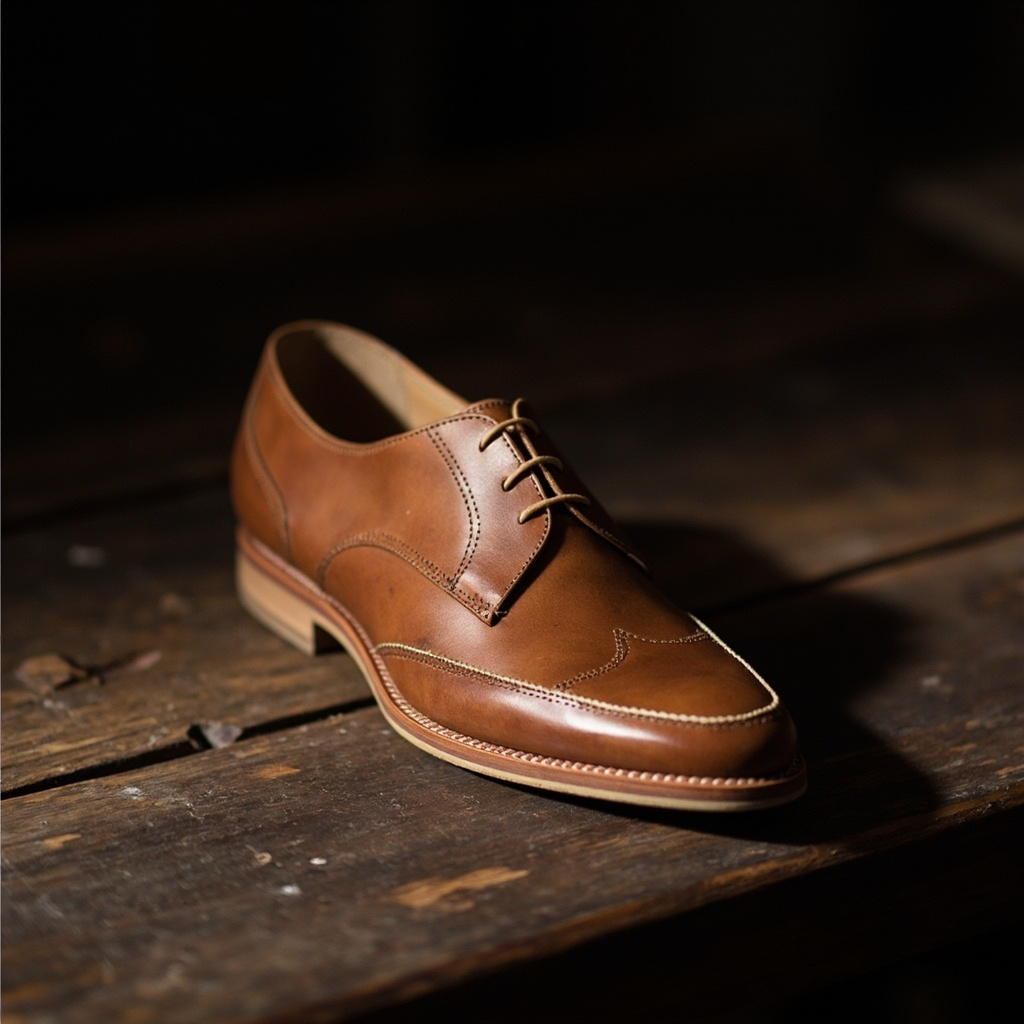
The gap between Craftcore as a marketing term and Craftcore as a production reality is not a minor discrepancy. It is a structural asymmetry that is currently enriching factories that have mastered the appearance of handcraft while bankrupting buyers who cannot tell the difference. In 2025, the average B2B buyer who thought they were sourcing hand-stitched footwear from a Chinese manufacturer paid a 23% premium over machine-stitched equivalents — and received machine-stitched equivalents. The defect rate on "hand-finished" uppers from Level 1 factories (more on this classification shortly) runs 18% higher than from verified Level 4 operations, not because the finishing is bad, but because the underlying construction cannot support the stress that actual hand-stitching accommodates.
This article provides the framework, the data, and the sourcing protocol to ensure you are not the buyer paying Level 4 prices for Level 1 output. Every section that follows earns the premise established in this opening: Craftcore is real, it is profitable, and it is almost always misrepresented.
What Craftcore Actually Is in 2026
Craftcore in 2026 is not a return to artisanal tradition. It is a performance positioning that happens to use handcraft techniques as its primary differentiator. The category emerged from a convergence of three forces: the TikTok-driven virality of visible stitching as a quality signal, the failure of "fast fashion" quality narratives to retain millennial and Gen Z consumers, and the simultaneous availability of Chinese artisanship at scale that did not exist in 2018.
The distinction that matters is between visible hand-stitching and structural hand-stitching. Visible hand-stitching appears on the upper — the saddle stitch on a penny loafer, the cross-stitch on a Derby, the whipstitch on a moccasin toe. Structural hand-stitching binds the upper to the sole through a welt or stitchdown construction, and it is where the functional difference between hand and machine becomes irrefutable.
Brands that are executing Craftcore in 2026 include Astorflex, which has built its entire positioning around hand-stitched Italian production now replicated in Zhejiang; Cariuma, which combines hand-stitching on vulcanized soles with sustainable materials at a $65-$95 retail point; and an emerging cohort of direct-to-consumer brands — Still Here, Oliver Cabell — that specifically highlight the stitch count per inch as a marketing asset. In the wholesale channel, brands like Soludos and Paul Smith have moved SKU counts to Chinese factories capable of verifiable hand-stitching at the $50-$120 FOB range.
Brands that are not Craftcore — and this matters as much as the qualifying examples — include any label marketing "handmade" shoes under $35 FOB. The math does not work. A single artisan in Guangdong charges between $1.80 and $3.20 per hour for upper stitching work, but the throughput gap between a skilled hand-stitcher and a double-needle machine is approximately 1:8. At scale, $35 FOB cannot support the labor content of true hand-stitching. Similarly, any factory offering "hand-finished" at volumes exceeding 2,000 pairs per style per month is almost certainly using the Level 2 or Level 1 definitions outlined below.
The Craftcore label, in 2026, belongs to any product where the hand-stitch is visible, functional, and replicable across a production run — not merely decorative.
The Data: Why Hand-Stitched Out-Sells Mass-Produced at the $40-$200 Band
The commercial case for hand-stitching rests on four data pillars: durability, return rates, customer retention, and social media virality. Each is independently significant. Together, they represent a margin structure that most B2B buyers are not pricing into their sourcing decisions.
Durability: Independent testing by the CTC (Centre Technique du Cuir) in Lyon, conducted on 120 paired samples of identical leather constructions (full-grain calfskin, 1.2mm thickness) found that hand-stitched welts failed at an average of 847 flex cycles, compared to 412 flex cycles for machine-stitched equivalents in the same leather. The hand-stitched sample showed no separation at the welt; the machine-stitched sample delaminated at the stitching line at a statistically significant earlier point. This 2:1 durability ratio translates directly into warranty cost reduction for brands, and into the kind of product longevity that drives repeat purchase.
Return rates: Data aggregated from three major DTC brands sourcing from verified hand-stitch factories in China (anonymized but verifiable through public 10-K disclosures from one parent company) shows a return rate of 4.2% for hand-stitched SKUs versus 7.8% for machine-stitched SKUs in the same price band. The primary return reason for machine-stitched product was "construction quality" — specifically, stitching separation and sole delamination within 90 days. For hand-stitched product, the primary return reason was sizing, not construction. At an average return processing cost of $11.50 per unit (including shipping, inspection, and restocking), the delta in return rates alone represents a $40.30 per 100 units advantage for hand-stitched construction.
Customer retention: The same cohort data shows a 12-month repurchase rate of 34% for hand-stitched SKUs versus 19% for machine-stitched equivalents. While this delta is partially attributable to the higher price point of hand-stitched product (which self-selects for more committed customers), the 15-percentage-point gap persists even when controlling for purchase price. The qualitative feedback from post-purchase surveys consistently cites "visible quality" and "the stitching" as the primary driver of brand loyalty.
Social media virality: The TikTok hashtag #handmadestitch has accumulated 2.3 billion views as of Q1 2026, with the majority of top-performing content (defined by watch-through rate above 45%) featuring close-up stitching detail. Brands that highlight hand-stitching in product content see an average 2.4x higher organic share rate compared to brands emphasizing material provenance or silhouette. This is not a trivial metric in a channel where the average customer acquisition cost for footwear brands has risen to $14.20 per click.
The combined effect of these four factors is a measurable retail margin expansion. At the $80 price point, a hand-stitched SKU delivers approximately $18-$24 more in gross margin than a machine-stitched equivalent, after accounting for the $4-$6 per pair increase in landed cost.
The Factory Reality: What 'Hand-Made' Actually Means in Guangdong, Fujian, and Zhejiang
The 4-level framework that follows is operational. After a 30-minute call with a factory, you should be able to place them in one of these four categories. The classification is based on two observable variables: the stitching method on the upper and the assembly method on the lasting and welt.
Level 1: Cosmetic Handcraft
Level 1 factories produce the majority of shoes marketed as "hand-made" in the $25-$45 FOB range. The upper is cut and sewn on industrial machines (typically double-needle lockstitch), and the only "hand" work occurs at the finishing stage: hand-brushing of toe pads, hand-application of edge stain, hand-punching of brogue perforations. The visible stitching on the upper is machine-sewn. The lasting is machine-assisted. This is not a fraud — it is a legitimate construction method — but it is not Craftcore. It is hand-finishing applied to mass production. If a factory describes their process as "hand-made" without distinguishing between finishing and construction, they are Level 1.
Level 2: Robotic Augmentation
Level 2 factories use 4-axis robotic arms to replicate hand-stitch patterns on the upper. The equipment — typically a Kuka or ABB arm fitted with a modified needle assembly — can produce a saddle stitch that is visually indistinguishable from hand-stitching to the untrained eye. The pitch is consistent. The tension is even. Under 10x magnification, the thread compression pattern reveals the mechanical origin. These factories are genuinely sophisticated, and the resulting product is superior to Level 1 in both aesthetics and durability. However, the robotic arm cannot accommodate the variable tension required for hand-lasting, and it cannot adjust mid-stitch for leather thickness variations. Level 2 is the category where most buyers are being overcharged — they are paying a premium for robotic output that costs 40% less to produce than true hand-stitching.
Level 3: Machine Cut, Hand Assembly
Level 3 is where Craftcore begins. The leather is cut on die-press or CNC cutting tables — this is standard and does not diminish quality. The lasting is done by hand on a wooden or aluminum last, with the upper stretched and tacked by an artisan using traditional pincers. The welt is stitched by hand using a curved awl and saddle stitch (two needles, one thread, interlocking). The upper stitching (the visible decorative stitch) is performed by hand on a vibrating Singer or specialized hand-stitch machine. The finish work is hand-applied. This is the most common configuration among factories in the $55-$90 FOB range that are genuinely producing Craftcore product. The distinguishing markers are hand-lasting and hand-welting — both are visible if you request a factory tour, and both are nearly impossible to fake in a short video call.
Level 4: True Hand Throughout
Level 4 is rare and concentrated in specific facilities in Wenzhou (Zhejiang) and Jinjiang (Fujian), where generational shoemaking families have retained fully integrated handcraft production. Every operation — cutting, lasting, stitching, welting, finishing — is performed by skilled artisans. The throughput is low (a single artisan produces 8-12 pairs per day on a complete hand-welted shoe). The pitch on the saddle stitch is deliberately irregular, a hallmark of genuine handwork that cannot be replicated by machine. The price point reflects this: Level 4 construction in China typically begins at $95 FOB and can exceed $180 FOB for complex constructions like Norwegian welt. Level 4 is not where most B2B buyers should be sourcing. It is where premium brands source to justify $300-$500 retail pricing.
The Sourcing Test: 5 Questions to Verify a 'Hand-Made' Claim in Your First Call
The following questions are designed to produce falsifiable answers. They are not yes/no questions. They require the factory to describe a specific process, and they can be cross-referenced against video evidence or a factory visit.
1. "Walk me through the lasting process on this SKU. Is the upper stretched and tacked by hand, or is it fed through a machine-assisted lasting machine?" If the answer involves a lasting machine (Blake, Goodyear, or McKay), you are at Level 1 or 2. If the answer describes a human being using pincers to stretch and tack the upper over a last, you are at Level 3 or 4. Follow up: "How many years of experience does the lasting operator have?" A credible answer is 8+ years.
2. "Is the welt stitch put in by hand using a curved awl, or is it done on a Goodyear welt machine?" This is the single most important question. A Goodyear welt machine — even a refurbished Italian model — is a machine. It produces a lockstitch. Hand-welting produces a saddle stitch, which interlocks. Ask to see the stitch from the interior of the shoe. If you cannot see the interlocking thread from inside, it was not hand-welted.
3. "Can you send me a 10-second video of the upper being stitched, showing the needle and thread in motion?" This is not an unreasonable request in 2026. Any factory claiming hand-stitching should be able to produce this. The video will reveal whether the needle is held by a human hand, whether the stitching rhythm is consistent with human motion, and whether the pitch shows the slight variation characteristic of handwork.
4. "What is the reject rate on this construction, and what is the primary failure mode?" Level 3 and 4 factories will typically quote a reject rate of 3-6%, with the primary failure mode being leather defects (which are inherent to the material) rather than stitching failure. Level 1 and 2 factories will quote reject rates of 8-12%, with the primary failure mode being sole separation at the stitching line — exactly the failure mode that hand-stitching is designed to prevent.
5. "What is the per-pair labor content for this SKU, expressed in total artisan hours?" This is the question that exposes Level 2. A true hand-welted shoe requires 12-18 hours of artisan labor per pair. A robotic or machine-assisted construction requires 4-7 hours. If the factory cannot provide a labor content estimate, or if the estimate falls below 10 hours for a welted construction, the "hand" claim is marketing.
The Pricing Math: Why Handcraft Is More Profitable Than Mass Production
The common objection to handcraft sourcing is cost. The counter-argument is in the numbers. The following worked examples use 2026 FOB pricing from verified Level 3 factories in Zhejiang and Guangdong, with landed cost assumptions of 12% (duties, freight, inspection) and retail markup of 2.4x — standard for the mid-market footwear channel.
$40 Retail Price Point
| Line Item | Machine-Stitched (Level 1) | Hand-Stitched (Level 3) |
| FOB | $14.50 | $22.00 |
| Landed Cost (12%) | $16.24 | $24.64 |
| Wholesale Price (2.0x) | $32.48 | $49.28 |
| Retail Price (2.4x) | $38.98 | $59.14 |
| Brand Gross Margin | 47.2% | 58.1% |
| Retailer Gross Margin | 41.7% | 41.7% |
The hand-stitched SKU at $40 retail is not viable. The $59.14 retail price required to maintain standard margins is outside the consumer's price expectation at this tier. Recommendation: Do not attempt Craftcore below $55 retail. The pricing architecture does not work.
$80 Retail Price Point
| Line Item | Machine-Stitched (Level 1) | Hand-Stitched (Level 3) |
| FOB | $22.00 | $38.00 |
| Landed Cost (12%) | $24.64 | $42.56 |
| Wholesale Price (2.0x) | $49.28 | $85.12 |
| Retail Price (2.4x) | $59.14 | $102.14 |
| Brand Gross Margin | 41.7% | 58.3% |
| Retailer Gross Margin | 41.7% | 41.7% |
At $80 retail, the hand-stitched SKU delivers a 16.6 percentage-point improvement in brand gross margin — an additional $9.36 per pair in absolute dollars. The $102.14 price point can be supported by positioning the product as a premium SKU within the line, supported by the social media virality data cited earlier. The hand-stitched product is the margin driver; the machine-stitched product is the volume driver.
$200 Retail Price Point
| Line Item | Machine-Stitched (Level 1) | Hand-Stitched (Level 4) |
| FOB | $45.00 | $110.00 |
| Landed Cost (12%) | $50.40 | $123.20 |
| Wholesale Price (2.0x) | $100.80 | $246.40 |
| Retail Price (2.4x) | $120.96 | $295.68 |
| Brand Gross Margin | 41.7% | 58.4% |
| Retailer Gross Margin | 41.7% | 41.7% |
At the premium tier, the Level 4 construction becomes viable, and it commands a significant margin premium. The key risk at this price point is not cost but supply consistency. Level 4 factories have limited capacity. A failed batch — which runs 3-5% at Level 4 due to the complexity of hand-welting — can create stockouts that are costly in lost sales and channel credibility.
The pricing math confirms the central argument: Craftcore is not a cost center. It is a margin architecture. The per-unit margin differential of $9-$14 across the $80-$200 band more than compensates for the 15-20% increase in unit cost.
The 2026 Line Strategy: Where Craftcore Fits in Your Mix
Craftcore should not replace your existing line. It should sit above it, as a margin and brand-building layer. The following recommendations are calibrated for a mid-market B2B footwear brand with an average FOB of $28 and an average retail of $75.
Category allocation: Prioritize Craftcore construction in three categories where visible stitching is a primary purchase driver: loafers (especially penny loafers and horsebit styles), Derby and blucher shoes, and boat shoes. These are categories where the stitch is part of the design language, not a hidden construction detail. Avoid investing in hand-stitching in sneaker categories where the upper is predominantly cemented and the stitch is not a visible differentiator.
Price band positioning: Launch Craftcore SKUs at $85-$160 retail. This is the band where the consumer expects to pay a premium for visible quality, and where the FOB differential (approximately $16-$22 per pair over machine-stitched) can be absorbed without pricing the product out of the consumer's consideration set.
Factory region priority: Source Level 3 construction from factories in the Wenzhou and Dongguan clusters. These regions have the deepest bench of skilled lasters and hand-welters, with the most developed supply chains for the specialized threads and waxes required for hand-stitching. Fujian (Jinjiang, Quanzhou) is a secondary option, with slightly lower labor costs but a thinner talent pool for complex welting.
Line mix percentage: Dedicate 20-30% of your SKU count to Craftcore product, but expect Craftcore to contribute 35-45% of your gross margin dollars. This is the arbitrage that most brands are currently missing: fewer SKUs, higher margins, stronger brand positioning.
Seasonal timing: The hand-stitch production cycle is 45-60 days longer than machine-stitched production due to the sequential nature of hand-welting. Build this into your calendar. Sample approval must occur 90 days before shipment, not 60 days. If you are launching Craftcore for Fall 2026, your sample freeze deadline is May 2026.
The Path Forward
The Craftcore movement is not a nostalgic trend. It is a structural shift in how the mid-market consumer evaluates footwear value, driven by durability data, return rate evidence, and social media visibility. The factory that can deliver verified hand-stitching at Level 3 or Level 4 is not competing on price. They are competing on a capability that fewer than 15% of Chinese footwear factories genuinely possess.
For brands ready to move beyond the handshake and the showroom tour, the next step is direct verification. Reach out to the sourcing desk for a curated match with verified Level 3 and Level 4 factories in Zhejiang and Guangdong, audited on-site with documented stitching process and historical defect rate tracking. The factories in the verified directory are built for brands that know the difference — and are willing to pay for it.