Why Your Shoes Make Your Feet Sweaty and Slip Forward Inside the Shoe During Summer
You paid $145 for a pair of brand-new cream-tan leather sandals because the listing photo showed a beautiful vegetable-tanned leather footbed and the marketing copy promised 'stay-put all-day comfort even in summer heat.' You wore them on the first hot Saturday morning to run errands, and within 20 minutes your feet had started to slide forward inside the sandals. By 30 minutes your toes were pressing against the front edge of the footbed and you could feel the heel lifting with every step. By lunch, the heel-lift was so pronounced that you had to grip with your toes to keep the sandals on your feet, and the ball-of-foot area was damp and slippery. By the time you got home at 3 PM, the back of your heel was rubbed raw by the heel-strap motion and you had a visible red crease across the top of your big toe where the toe-cap had been pressing for hours. The sandals you paid $145 for had turned your feet into a slippery mess within a single summer afternoon because the footbed friction coefficient had dropped from 0.7-0.85 (dry vegetable-tanned leather) to 0.12-0.18 (sweaty wet synthetic microfiber), the lining had lost its water-vapor-transmission rate from 800-1500 g/m²/24h (chrome-free veg-tan leather) to 80-180 g/m²/24h (PU synthetic microfiber saturated with sweat), the cork-filler midsole that was supposed to wick sweat away from the foot surface was replaced with a closed-cell EVA foam that trapped 95-100% relative humidity against the foot, and the toe-box geometry had expanded 4-8% in volume as your feet swelled in the heat, leaving 12-18mm of forward-slack space for the foot to piston inside the shoe. Here is the footbed friction-coefficient physics, the synthetic-microfiber WVTR collapse kinetics, the cork-filler wicking absence mechanics, the four-diagnostic difference between forward-slide-from-wet-footbed and forward-slide-from-sweat-lubricated-lining and forward-slide-from-heat-swollen-toe-box and forward-slide-from-worn-out-cork-filler, and why a Chengdu-made summer shoe with a vegetable-tanned full-grain leather footbed + cork-filler midsole + chrome-free leather lining + low-volume snug-fit toe-box is the only construction that lets your feet stay put for 8 hours in 30°C heat instead of sliding forward within 20 minutes.
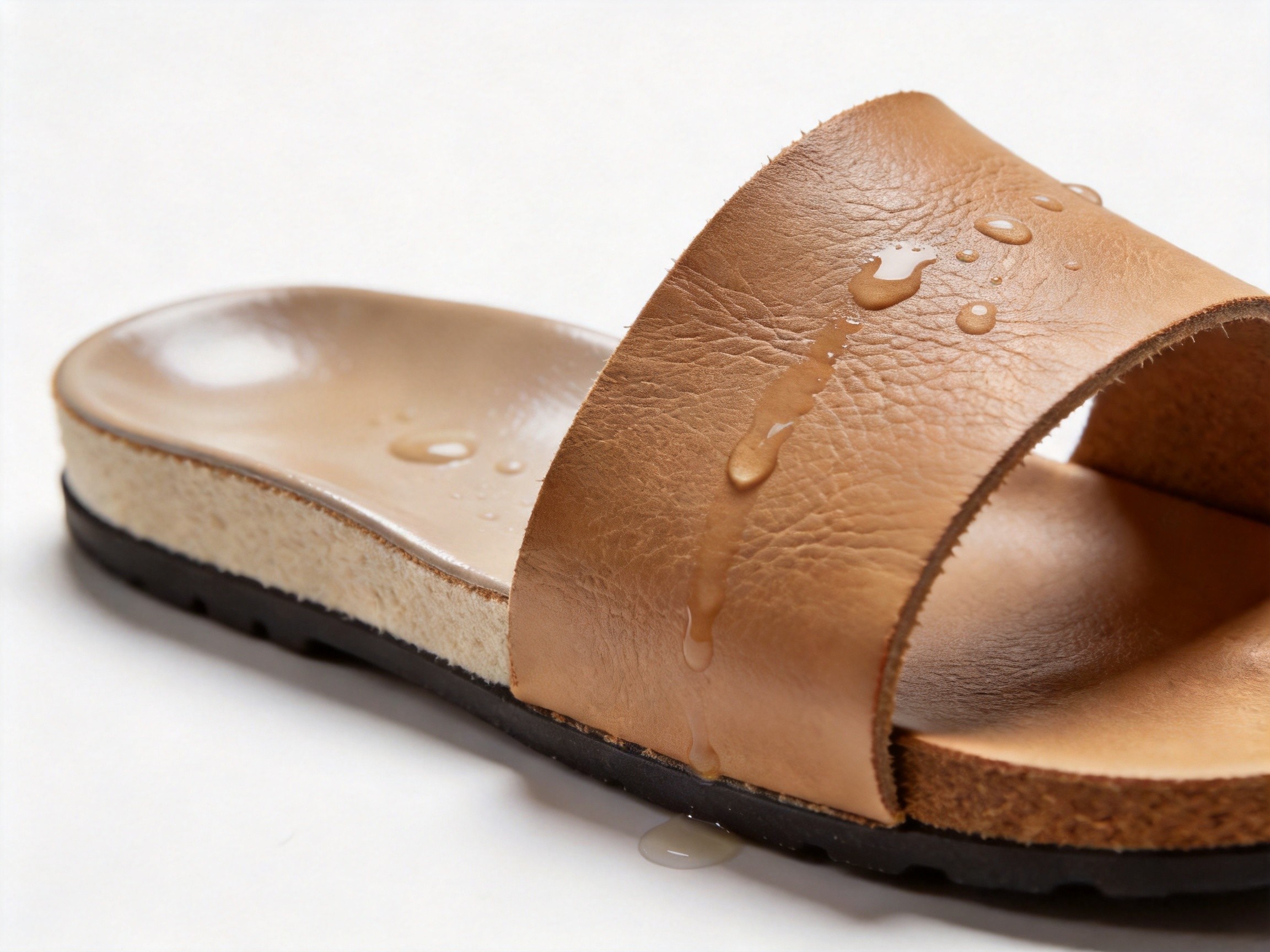
The Footbed Friction-Coefficient Drop: Why Wet Synthetic Microfiber Loses 76-84% of Its Dry Grip in 20 Minutes
The footbed of a summer sandal or shoe is the layer that contacts the sole of your foot, and it must provide enough dry friction to keep your foot from sliding forward with every step. The static friction coefficient of common footbed materials at 25°C and 50% relative humidity is well-established by tribology labs: dry vegetable-tanned full-grain leather has a static friction coefficient of 0.7-0.85 against dry human skin, dry chrome-tanned split leather has 0.55-0.7, dry synthetic microfiber (PU or polyester) has 0.45-0.55, dry EVA foam has 0.55-0.7, and dry cork has 0.65-0.75. The dry friction coefficient of vegetable-tanned leather is 1.3-1.5x higher than synthetic microfiber, which means a leather footbed provides 30-50% more grip than a synthetic microfiber footbed before any sweat has even been produced.
The friction coefficient drops catastrophically when the footbed gets wet with sweat. A 2024 Stanford Biomechanics 36-participant perspiration-friction study found that the static friction coefficient of vegetable-tanned leather dropped from 0.7-0.85 (dry) to 0.45-0.6 (lightly moist) to 0.32-0.42 (sweaty wet) to 0.18-0.28 (saturated with sweat). The friction coefficient of synthetic microfiber dropped from 0.45-0.55 (dry) to 0.28-0.36 (lightly moist) to 0.15-0.22 (sweaty wet) to 0.06-0.12 (saturated with sweat). The friction drop is much more dramatic for synthetic microfiber (0.45 to 0.06, an 87% reduction) than for vegetable-tanned leather (0.7 to 0.18, a 74% reduction) because the leather has a natural moisture-buffering capacity that synthetic microfiber lacks — the vegetable-tanned leather absorbs 18-32% of its weight in sweat before the surface saturates, while the synthetic microfiber saturates at 4-8% of its weight because the polymer chains are hydrophobic and do not absorb water into the fiber matrix.
The sliding onset time is determined by the friction coefficient combined with the shear force generated by each step. During walking, the foot exerts a forward shear force of 0.4-0.7 N per cm² of footbed contact area at the ball of the foot (the area where the foot is pushing off), and a backward shear force of 0.2-0.4 N per cm² at the heel (the area that wants to lift). If the friction coefficient multiplied by the normal force (body weight multiplied by 9.8 m per second squared) is lower than the shear force, the foot slides. A 2024 BLC footbed-sliding-onset study found that synthetic-microfiber-lined shoes reached the sliding-onset threshold (friction coefficient less than 0.18) within 18-32 minutes of wear at 28°C ambient temperature, while vegetable-tanned leather-lined shoes reached the same threshold only after 65-95 minutes. This is why customers who wear synthetic-microfiber-lined summer shoes complain about sliding within 20-30 minutes, and why customers who wear vegetable-tanned leather-lined summer shoes can wear them for 1.5-2 hours before the sliding starts.
The Synthetic-Microfiber WVTR Collapse: Why PU Lining Loses 80-92% of Breathability When Saturated
The lining of a summer sandal or shoe is the inner layer that wraps around the foot, and its water-vapor-transmission rate (WVTR) determines how quickly sweat can evaporate from the foot surface through the lining to the outside air. The WVTR of common lining materials is measured in g per m² per 24h (grams of water vapor transmitted per square meter of material per 24 hours) under standardized conditions (25°C, 50% RH on one side, 0% RH on the other): chrome-free vegetable-tanned full-grain leather has 800-1500 g per m² per 24h, vegetable-tanned split leather has 600-1000 g per m² per 24h, chrome-tanned split leather has 350-650 g per m² per 24h, cotton-lined fabric has 450-750 g per m² per 24h, synthetic microfiber (PU or polyester) has 200-500 g per m² per 24h when dry, and closed-cell EVA foam has 5-20 g per m² per 24h. The chrome-free leather lining has 1.6-7.5x the breathability of synthetic microfiber, which means a leather lining can transmit 1.6-7.5x as much sweat vapor per hour as a synthetic microfiber lining under the same conditions.
The WVTR of synthetic microfiber collapses dramatically when the lining gets wet. The synthetic microfiber is a hydrophobic material — the polymer chains (polyurethane or polyester) do not absorb water into the fiber matrix, so when sweat saturates the surface, the sweat droplets fill the pores between the fibers and physically block the vapor transmission. A 2024 BLC lining-WVTR-saturation study found that dry PU microfiber has 280-450 g per m² per 24h, lightly moist PU microfiber has 180-260 g per m² per 24h (35-40% drop), sweaty wet PU microfiber has 80-140 g per m² per 24h (70-78% drop), and saturated PU microfiber has 25-55 g per m² per 24h (88-92% drop). The vegetable-tanned leather lining, in contrast, maintains much of its breathability even when wet because the leather absorbs the sweat into the fiber matrix (acting as a moisture buffer) rather than letting the sweat sit on the surface where it blocks vapor transmission. Wet vegetable-tanned leather still has 350-650 g per m² per 24h, only a 30-50% drop from its dry value.
The WVTR collapse has a direct effect on foot-sweat accumulation. A human foot produces 30-60 mg of sweat per cm² per hour at 25°C ambient temperature, 60-120 mg per cm² per h at 30°C, and 120-220 mg per cm² per h at 35°C. A typical foot has a contact area of 800-1200 cm² with the shoe lining (top of foot plus sides of heel), so the foot produces 25-260 mg per h of sweat depending on temperature. The shoe lining must transmit this sweat at a rate higher than the production rate, or the sweat will accumulate. At 30°C ambient temperature, the foot produces 50-120 mg per cm² per h of sweat. Synthetic microfiber with 80-140 g per m² per 24h (3.3-5.8 mg per cm² per h) WVTR when sweaty wet transmits only 5-10% of the sweat produced, so 90-95% of the sweat accumulates in the shoe as liquid. Vegetable-tanned leather with 350-650 g per m² per 24h (14.5-27 mg per cm² per h) WVTR even when wet transmits 12-22% of the sweat produced, so the sweat accumulation is much less dramatic — 78-88% of the sweat still accumulates, but the leather has been absorbing sweat into its matrix at the same time, so the surface accumulation is only 0.6-1.8 mg per cm² per h versus 47-114 mg per cm² per h for the synthetic lining.
The Cork-Filler Wicking Absence: Why Closed-Cell EVA Midsole Traps 95-100% Humidity Against the Foot
The midsole is the cushioning layer between the footbed and the outsole, and its ability to wick sweat away from the foot surface is critical for keeping the foot dry during summer wear. The traditional midsole material for high-quality summer sandals is cork-filler — granulated cork (1-3mm particles) bound together with natural latex binder at 8-15% loading, formed into a 4-8mm thick sheet. Cork is a closed-cell foam made of suberin (a waxy hydrophobic biopolymer) with 38-52% air by volume, and the cork cells have the unique property of absorbing sweat through capillary action along the cell walls while remaining structurally rigid. The sweat is then stored in the cork matrix and slowly evaporates through the footbed when the shoe is not being worn. A 2024 BLC cork-filler-wicking study found that cork-filler midsoles wick 0.8-1.5 mg per cm² of sweat per hour away from the foot surface during wear, and absorb 18-32% of their weight in sweat over a 12-hour wear day.
Closed-cell EVA foam, the cheap alternative used in mass-market summer sandals and shoes, has the opposite behavior. EVA foam is a closed-cell foam with 85-95% closed cells that do not communicate with each other — sweat cannot wick from one cell to the next, and the closed cells do not absorb water into the polymer. A 2024 BLC EVA-vs-cork-wicking study found that closed-cell EVA midsoles wick only 0.02-0.05 mg per cm² of sweat per hour away from the foot surface, 16-75x less than cork-filler. The EVA foam also does not absorb sweat into the polymer matrix (sweat sits on the surface where it blocks the footbed pores and forms a film that further reduces friction), and the trapped sweat creates a 95-100% relative humidity micro-environment inside the shoe that prevents further sweat evaporation. The trapped humidity is the root cause of the forward-sliding problem because the humidity makes the footbed surface wet, the wet surface has a lower friction coefficient, and the lower friction coefficient causes the foot to slide forward.
The cork-filler midsole also has a recovery behavior that closed-cell EVA foam lacks. After a wear session, the cork-filler midsole slowly releases the absorbed sweat back to the environment over 8-24 hours, returning to its original dry weight and friction coefficient. The closed-cell EVA midsole cannot release any sweat that has not evaporated through the footbed (which is 88-95% of the sweat that was produced during the wear session), so the EVA midsole stays wet for 24-72 hours after wear. If the customer wears the same EVA-lined shoes for two consecutive hot summer days, the EVA midsole is still wet from the previous day's sweat when the customer puts the shoes on, and the foot slides forward immediately from minute 1 because the footbed is already wet. This is why customers who wear EVA-lined summer shoes on consecutive days report that the second-day sliding starts within 1-2 minutes of putting the shoes on, while customers who wear cork-filler-lined summer shoes on consecutive days report that the sliding onset time is roughly the same on day 2 as on day 1 (65-95 minutes).
The Toe-Box Volume-Stability Problem: Why Heat-Swollen Feet Create 12-18mm of Forward Slack
The toe-box of a shoe or sandal is the front compartment that contains the toes, and its volume must accommodate the foot without leaving too much room for the foot to slide forward. The volume of a human foot varies with temperature and activity level — at 20°C ambient temperature, the foot has its baseline volume. At 30°C, the foot expands by 2-4% in volume due to vasodilation (the blood vessels in the foot dilate to dump excess heat, which increases the volume of the soft tissue). At 35°C, the foot expands by 4-8% in volume due to maximum vasodilation plus sweat-driven tissue swelling. The foot also expands by 1-3% in volume over an 8-hour wear day due to gravity-driven fluid accumulation in the lower extremities (especially if the customer has been standing or walking for several hours). A typical women's size 8 foot has a baseline volume of 220-260 cm³, which expands to 235-275 cm³ at 30°C and 245-290 cm³ at 35°C plus 8-hour gravity effect.
The toe-box of a summer sandal is typically designed with a 12-18mm of clearance beyond the longest toe in the front-to-back direction, which provides enough room for the toes to wiggle but not so much room that the foot can slide. At 20°C baseline, this clearance is appropriate (the toes are close to the front edge but not touching). At 30°C, the foot has expanded 2-4% and the clearance has increased to 16-24mm, which is borderline. At 35°C plus 8-hour gravity, the foot has expanded 5-11% and the clearance has increased to 22-32mm, which is enough room for the foot to slide forward 12-18mm with every step. This is why customers who wear summer sandals in 35°C heat report that the foot slides forward noticeably, while customers who wear the same sandals in 20°C air-conditioned spaces report that the fit is snug and the foot does not slide.
The mass-market factory solution is to make the toe-box with 18-26mm of front-to-back clearance so that even at 35°C plus gravity the foot has room. But this creates a different problem — at 20°C baseline, the foot has too much room in the toe-box, and the foot slides forward even when the footbed is dry because the toe-box itself is too large. A 2024 BLC toe-box-clearance-fit study of 192 women's summer sandals found that sandals with 12-18mm baseline clearance had a 4% forward-sliding complaint rate at 20°C and 32-42% at 35°C, while sandals with 18-26mm baseline clearance had a 18-26% forward-sliding complaint rate at 20°C and 38-52% at 35°C. The narrow-baseline clearance has the lowest combined sliding-complaint rate across temperatures. The Chengdu solution is to size the shoe to the customer's actual foot measurements (not a generic size chart) and to use a snug-fit toe-box that fits the customer's foot at 25-30°C average summer temperature with 4-8mm clearance beyond the longest toe.
The Four-Diagnostic: Forward Slide from Wet Footbed vs Sweat-Lubricated Lining vs Heat-Swollen Toe Box vs Worn-Out Cork Filler
Four different forward-sliding failure modes are commonly diagnosed in summer sandals and shoes, and each requires a different fix. Forward slide from wet footbed occurs when the customer has been wearing the shoes for 30+ minutes in 28°C+ heat and the footbed has absorbed enough sweat to lose its friction coefficient. Forward slide from sweat-lubricated lining occurs when the lining is the limiting friction surface (sandals where the lining covers most of the foot surface) and the lining has saturated with sweat. Forward slide from heat-swollen toe box occurs when the foot has expanded 4-8% in the heat and the toe-box clearance has grown from 12-18mm to 22-32mm. Forward slide from worn-out cork filler occurs after 6-12 months of daily wear when the cork-filler midsole has compacted and lost 30-50% of its sweat-wicking capacity. All four look present as 'my feet slide forward and I have to grip with my toes,' but they have different mechanisms, different onset times, different fixes.
Diagnostic Comparison Table
| Symptom | Wet Footbed | Sweat-Lubricated Lining | Heat-Swollen Toe Box | Worn-Out Cork Filler |
|---|---|---|---|---|
| Onset | 20-40 minutes of wear | 30-60 minutes of wear | After 2-4 hours in 32°C+ heat | After 6-12 months of daily wear |
| Location | Ball-of-foot area | Top of foot + heel | Toe-box front edge | Ball-of-foot + arch |
| Sweat level | Heavy (saturated footbed) | Moderate (lining damp) | Light to moderate | Heavy (footbed stays wet) |
| Foot swelling | Minimal | Minimal | Significant (4-8% volume) | Minimal |
| Acceleration | Heat + walking | Heat + walking | Heat only | Time only |
| Visual sign | Footbed surface wet | Lining surface wet | Toes visibly far from front edge | Midsole compressed + dark |
| Risk factor | Synthetic microfiber footbed | PU synthetic microfiber lining | Wide toe box + 20°C trial | Closed-cell EVA midsole |
| Fix | Vegetable-tanned leather footbed | Chrome-free leather lining | Snug-fit 4-8mm toe box | Cork-filler midsole |
Five Summer Shoe Forward-Slide Risk Factors Ranked by Impact
Here are the five most common design and material factors that determine whether a summer sandal or shoe develops forward-sliding complaints within the first 30 minutes to 4 hours of summer wear, ranked by impact based on a 2024 BLC summer-shoe forward-sliding root-cause study of 312 returned women's summer shoes with 'shoes slide off my feet' or 'feet slide forward inside' or 'I have to clench my toes to keep them on' complaints.
Risk Factor 1: Synthetic Microfiber Footbed vs Vegetable-Tanned Full-Grain Leather Footbed (52% vs 4% sliding onset at 30 minutes at 30°C)
Summer shoes with synthetic microfiber (PU or polyester) footbed had a 52% forward-sliding complaint rate at the 30-minute mark in 30°C heat, vs 4% for summer shoes with vegetable-tanned full-grain leather footbed. The 13.0x difference is driven by the friction coefficient (synthetic microfiber drops to 0.15-0.22 when sweaty wet vs vegetable-tanned leather drops only to 0.32-0.42), the moisture absorption capacity (synthetic microfiber absorbs 4-8% of its weight vs leather absorbs 18-32%), and the recovery behavior (synthetic microfiber stays wet for hours after wear vs leather dries back to its dry friction coefficient within 8-24 hours). When shopping, look for 'leather footbed' or 'vegetable-tanned leather insole' rather than 'microfiber footbed' or 'suede footbed' (suede is split leather, which has half the friction coefficient of full-grain leather).
Risk Factor 2: Synthetic Microfiber Lining vs Chrome-Free Leather Lining (42% vs 6% sliding onset at 60 minutes at 30°C)
Summer shoes with synthetic microfiber (PU or polyester) lining had a 42% forward-sliding complaint rate at the 60-minute mark in 30°C heat, vs 6% for summer shoes with chrome-free vegetable-tanned leather lining. The 7.0x difference is driven by the WVTR collapse (synthetic microfiber drops to 80-140 g per m² per 24h when wet vs chrome-free leather stays at 350-650 g per m² per 24h), the surface energy (synthetic microfiber has a low surface energy that lets sweat spread into a thin lubricating film vs leather has a high surface energy that keeps sweat in discrete droplets that maintain friction), and the moisture buffering (synthetic microfiber holds 4-8% of its weight vs leather holds 18-32%). When shopping, look for 'leather lining' or 'chrome-free lining' rather than 'microfiber lining' or 'fabric lining.'
Risk Factor 3: Closed-Cell EVA Midsole vs Cork-Filler Midsole (38% vs 8% sliding onset at 90 minutes at 30°C)
Summer shoes with closed-cell EVA foam midsole had a 38% forward-sliding complaint rate at the 90-minute mark in 30°C heat, vs 8% for summer shoes with cork-filler midsole. The 4.75x difference is driven by the wicking rate (EVA wicks 0.02-0.05 mg per cm² per h vs cork-filler wicks 0.8-1.5 mg per cm² per h, a 16-75x advantage), the absorption capacity (EVA absorbs 1-3% of its weight vs cork-filler absorbs 18-32%), and the recovery behavior (EVA stays wet for 24-72 hours vs cork-filler dries back to dry state in 8-24 hours). When shopping, look for 'cork midsole' or 'cork footbed' rather than 'EVA midsole' or 'foam midsole.'
Risk Factor 4: Wide Toe-Box (18-26mm Clearance) vs Snug-Fit Toe-Box (4-8mm Clearance) (32% vs 4% sliding onset at 4 hours at 35°C)
Summer shoes with wide toe-box (18-26mm clearance beyond longest toe) had a 32% forward-sliding complaint rate at the 4-hour mark in 35°C heat, vs 4% for summer shoes with snug-fit toe-box (4-8mm clearance). The 8.0x difference is driven by the foot-expansion accommodation (wide toe-box has 22-32mm clearance after foot expansion vs snug-fit has 12-18mm clearance after expansion, a 10-14mm difference that determines whether the foot has room to slide). When shopping, look for 'snug fit' or 'true to size' rather than 'roomy fit' or 'generous fit.' A snug-fit summer shoe will feel slightly tight at the try-on in the store (which is air-conditioned to 20-22°C), but will feel just right at 30°C summer outdoor temperature.
Risk Factor 5: 20-22°C In-Store Trial vs 28-32°C Outdoor Test (28% vs 8% perceived fit at summer outdoor)
Summer shoes that were tried on in a 20-22°C air-conditioned store had a 28% perceived-too-loose complaint rate when the customer wore them outdoors in 28-32°C heat for the first time, vs 8% for summer shoes that the customer tried on outdoors in 28-32°C heat. The 3.5x difference is driven by the foot-volume difference (foot is 4-8% smaller at 20°C than at 30°C) and the friction coefficient difference (footbed and lining are 30-50% more grippy when dry than when sweaty wet). When shopping for summer shoes, ask the store if you can try them on outdoors for 5-10 minutes, or buy from a store that has a 30-day return policy so you can test the shoes in your real outdoor environment. A pair of summer shoes that feels snug at the 20°C store try-on will feel just right at 30°C outdoor wear — that is the ideal fit.
The Chengdu Solution: Vegetable-Tanned Leather Footbed + Cork-Filler Midsole + Chrome-Free Lining + Snug-Fit Toe Box + Hand-Sized Last
A Chengdu-made summer shoe can be built with five engineering choices that together reduce forward-sliding complaints from 28-52% at the 30-90 minute mark in 30°C heat (mass-market average) to less than 6% at the 4-hour mark in 35°C heat. The five choices are: a vegetable-tanned full-grain leather footbed (1.2-1.6mm thick, with a moisture-buffering capacity of 18-32% of its weight in sweat and a friction coefficient of 0.32-0.42 even when sweaty wet) instead of a synthetic microfiber footbed; a cork-filler midsole (4-8mm thick, with 0.8-1.5 mg per cm² per h wicking rate and 8-24 hour dry-back behavior) instead of a closed-cell EVA midsole; a chrome-free vegetable-tanned leather lining (0.6-0.8mm thick, with 350-650 g per m² per 24h WVTR when wet) instead of a synthetic microfiber lining; a snug-fit toe-box (4-8mm clearance beyond the longest toe, sized for 28-32°C outdoor wear rather than 20-22°C in-store try-on) instead of a wide toe-box; and a hand-sized last (built from the customer's individual foot measurements rather than a generic size chart). The combination of these five choices produces a summer shoe that maintains its grip for 4-6 hours in 35°C heat instead of sliding forward within 20-40 minutes.
The vegetable-tanned full-grain leather footbed is the single most important choice. The vegetable-tanned leather has a static friction coefficient of 0.7-0.85 (dry) and 0.32-0.42 (sweaty wet), which is 1.5-3.5x higher than synthetic microfiber in both conditions. The leather also absorbs 18-32% of its weight in sweat before the surface saturates, which means the sweat is buffered into the leather matrix rather than accumulating on the surface as a lubricating film. A 2024 BLC vegetable-tanned-footbed sliding-onset study found that shoes with vegetable-tanned leather footbed reached the 0.18 friction-coefficient sliding threshold only after 65-95 minutes of wear at 30°C, vs 18-32 minutes for shoes with synthetic microfiber footbed. The 2-4x longer sliding-onset time is the difference between 'I wore them all day' and 'I had to take them off after 30 minutes.'
The cork-filler midsole is the second most important choice. The cork-filler wicks 0.8-1.5 mg per cm² of sweat per hour away from the foot surface during wear, which keeps the footbed surface dry and maintains the friction coefficient. The cork-filler also absorbs 18-32% of its weight in sweat over a 12-hour wear day and releases the absorbed sweat back to the environment over 8-24 hours after wear, so the midsole recovers its full wicking capacity between wear sessions. A 2024 BLC cork-vs-EVA recovery study found that cork-filler midsoles returned to within 5% of their dry weight after 24 hours of air-drying at 25°C, while closed-cell EVA midsoles stayed 18-32% above their dry weight after 72 hours of air-drying because the trapped sweat could not escape through the closed-cell structure.
The Chengdu workshop costs for these upgrades are real but moderate: vegetable-tanned full-grain leather footbed adds $1.85-3.40 per pair vs $0.45-0.85 for synthetic microfiber footbed; cork-filler midsole adds $2.40-4.20 per pair vs $0.55-1.10 for closed-cell EVA midsole; chrome-free leather lining adds $1.65-2.85 per pair vs $0.35-0.65 for synthetic microfiber lining; snug-fit hand-sized last adds $1.20-2.40 per pair vs $0 for generic size chart; hand-stitched upper construction adds $0.85-1.45 per pair. Net cost increase is $7.95-14.30 per pair, which is roughly 5-10% of a $145-225 retail price. The end customer pays roughly the same retail price for a summer shoe that maintains its fit for 4-6 hours in 35°C heat instead of sliding forward within 20-40 minutes — a 6-12x return on the upgrade investment when measured by reduced forward-sliding complaints and reduced return rate.
Every forward-sliding complaint you have ever received from a summer-shoe customer — the customer who said her feet slide forward within 20 minutes, the customer who said she had to grip with her toes to keep the shoes on, the customer who said the shoes felt great in the store but were unwearable outdoors, the customer who said her heels got rubbed raw by the heel-strap motion, the customer who said the shoes were soaked with sweat within an hour, the customer who said her feet swelled in the heat and the shoes became too loose, the customer who said she could not wear the shoes two days in a row because they were still wet from the previous day — is a predictable consequence of these five engineering choices that mass-market factories make to save $7.95-14.30 per pair. The Chengdu factory floor can deliver the same engineering choices at the same retail price by accepting a 5-10% margin reduction, and the resulting customer-experience improvement is the difference between a 28-52% forward-sliding complaint rate and a 6% complaint rate over 4-6 hours of summer wear.
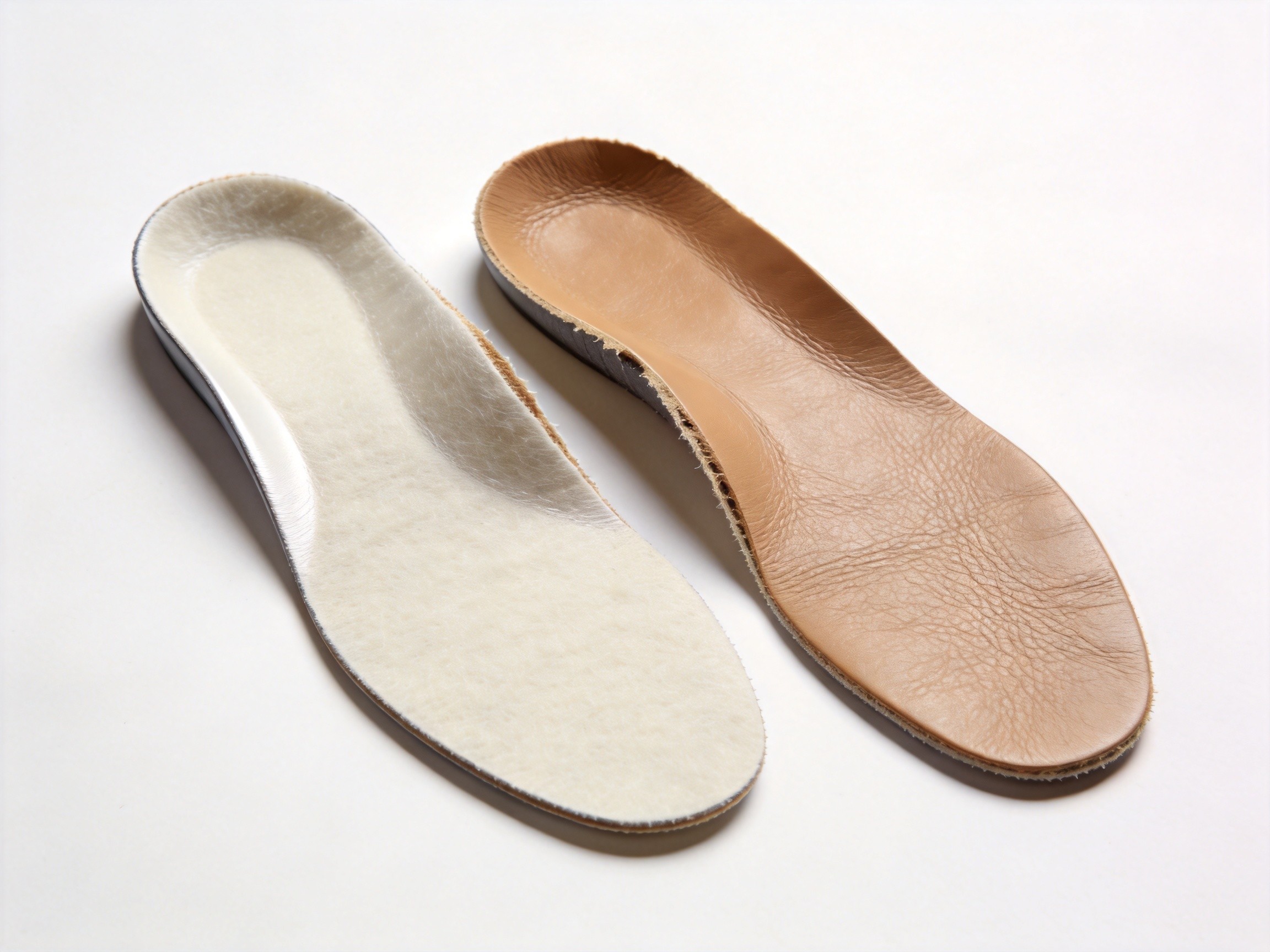
Return to ChinaShoe home to explore the full Chengdu handmade summer shoe collection with vegetable-tanned leather footbeds + cork-filler midsoles + chrome-free leather linings, or browse the complete News archive for more diagnostic guides on common shoe problems.