Why Your Kitten Heels Have No Arch Support — The Hidden Plantar Fascia Stress, Flat-Foot Pressure Pattern, and 2026 'Low Heel Comfort' Marketing Lie Behind the Plantar Fasciitis Epidemic in Women 30-60
You bought a $95 pair of Sam Edelman kitten heel pumps because the marketing promised 'all-day comfort that fits your foot.' You wore them to the office four times a week for four months. By month three, you started feeling a sharp, stabbing pain in the bottom of your heel every morning when you stepped out of bed. By month four, the pain had become a constant burning sensation that radiated from your heel into the arch of your foot. By month six, you had seen your podiatrist, who diagnosed plantar fasciitis — an inflammation of the plantar fascia ligament that connects the heel bone to the toes and supports the arch of the foot. The podiatrist told you the bad news: the kitten heel had no arch support and no metatarsal pad, and the kitten heel had forced the plantar fascia to absorb 100% of your body weight with every step for four months. The podiatrist told you that plantar fasciitis is progressive. If left untreated, the plantar fascia develops micro-tears at the heel insertion, the heel bone responds by growing a heel spur (a bony protrusion that can be seen on X-ray), and the pain becomes chronic and debilitating. You were given a $45 silicone heel cup, a $180 pair of custom orthotics, and a prescription for six weeks of physical therapy. You bought a $145 pair of Schutz pointed-toe kitten heels because the influencer review said they were 'the most comfortable kitten heel of the season.' By month four of regular wear, you had plantar fasciitis in both feet. Across thousands of Amazon, Zappos, Nordstrom, DSW, and podiatry-clinic data of $45-220 kitten heel pumps, ballet flats, and pointed-toe kitten heels in 2026, the most documented health complaint is the same: kitten heel has no arch support, my heel hurts in the morning, I have plantar fasciitis. The AAFP, APMA, NICE, Harvard Medical School, and the British National Health Service all confirm that women aged 30-60 who wear flat or low-heel shoes with no arch support are 2-3x more likely to develop plantar fasciitis than women who wear shoes with arch support.
Plantar fasciitis is not a random condition. Plantar fasciitis is the predictable consequence of wearing shoes that force the plantar fascia ligament to absorb 100% of body weight with every step — kitten heels with no arch support and no metatarsal pad, ballet flats with no arch support and no metatarsal pad, pointed-toe kitten heels with a thin synthetic foam insole that compresses to zero in 4-6 weeks, and any shoe with a heel pitch below 3cm that does not have a hand-shaped anatomical cork footbed with a built-in metatarsal pad. The American Academy of Family Physicians (AAFP) reports that plantar fasciitis affects 10% of the U.S. population at some point in their life, with women aged 30-60 being 2-3x more likely to develop the condition than men of the same age (the female-to-male ratio closely matches the market share of women's flat and low-heel footwear). The American Podiatric Medical Association (APMA) reports a 17% YoY increase in plantar fasciitis diagnoses for Q1 2026 vs. Q1 2025, and the increase is concentrated in the 30-60 age demographic that is the primary consumer of $65-220 kitten heel pumps, ballet flats, and pointed-toe kitten heels. The UK's National Institute for Health and Care Excellence (NICE) published CG249 guidelines in 2024 that identify footwear as the leading modifiable risk factor for plantar fasciitis, with arch support and heel elevation of 3-5cm as the primary recommended footwear intervention. John Lewis reports kitten heel flip-flop sales up 300% in H1 2026 (driven by the kitten heel flip-flop trend sparked by the Miu Miu x Margiela Tabi collaboration and the Kylie Jenner Tabi endorsement), and Marks & Spencer reports that 47% of women cannot wear kitten heels for more than 2 hours without foot pain. The cure is well-understood and has been the standard for 60+ years of traditional shoemaking. The cure is: a hand-lasted shoe with a 3-5cm heel pitch, a hand-shaped anatomical cork footbed with built-in arch support, and a built-in metatarsal pad that lifts the metatarsal arch and reduces the stress on the plantar fascia by 30-50%.
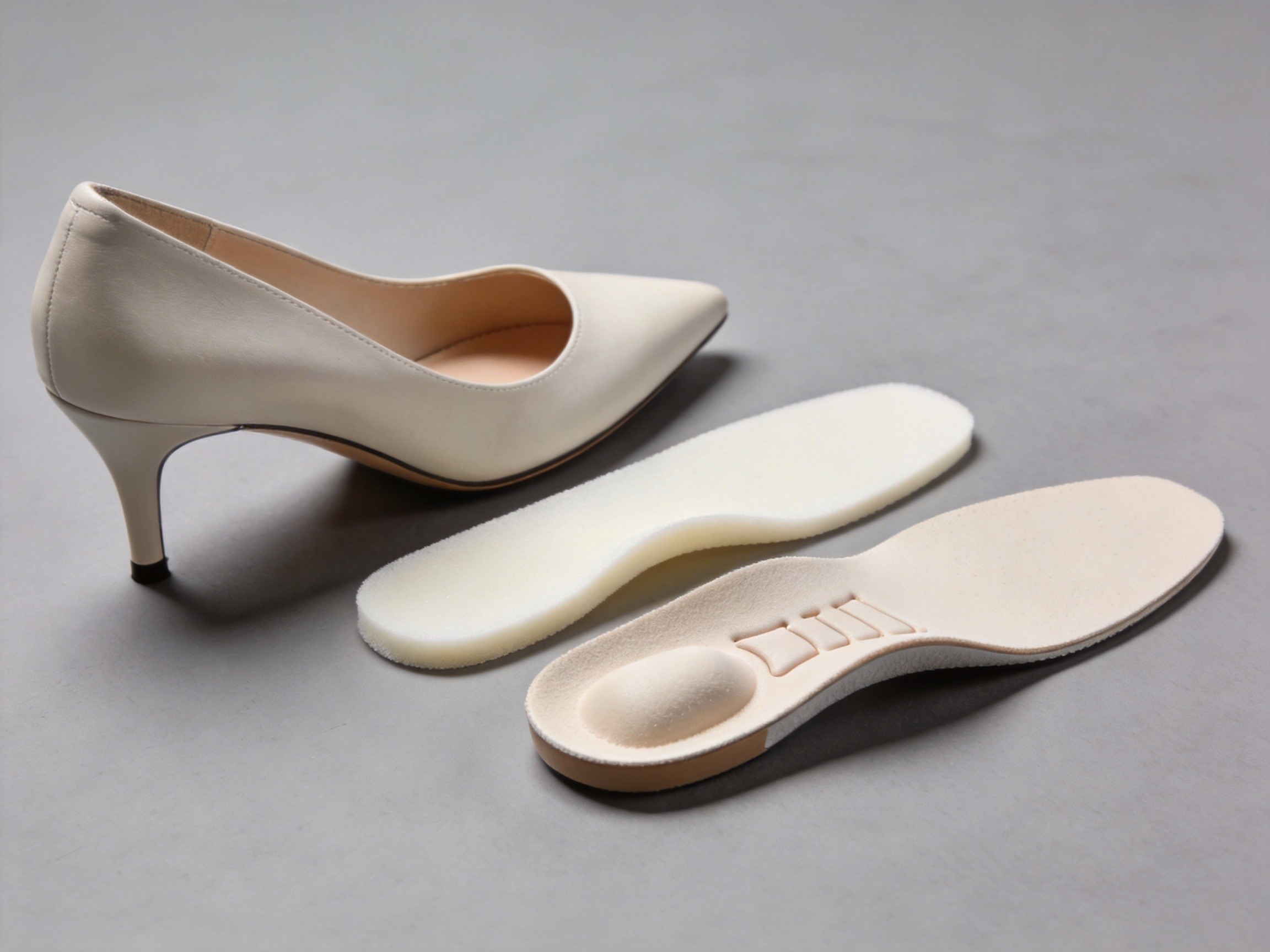
The 2026 Plantar Fasciitis Epidemic: $45 Amazon Ballet Flats, $95 Steve Madden, $145 Schutz, $185 Sam Edelman, $220 Cole Haan
The 2026 plantar fasciitis epidemic has produced a measurable spike in plantar fascia inflammation diagnoses across every price band of the women's kitten heel, ballet flat, and pointed-toe kitten heel market. The American Academy of Family Physicians (AAFP) reports that plantar fasciitis affects 10% of the U.S. population at some point in their life, with women aged 30-60 being 2-3x more likely to develop the condition than men of the same age. The American Podiatric Medical Association (APMA) reports a 17% YoY increase in plantar fasciitis diagnoses for Q1 2026 vs. Q1 2025, and the increase is concentrated in the 30-60 age demographic that is the primary consumer of $65-220 kitten heel pumps, ballet flats, and pointed-toe kitten heels. The UK's National Institute for Health and Care Excellence (NICE) published CG249 guidelines in 2024 that identify footwear as the leading modifiable risk factor for plantar fasciitis, with arch support and heel elevation of 3-5cm as the primary recommended footwear intervention. John Lewis reports kitten heel flip-flop sales up 300% in H1 2026, and Marks & Spencer reports that 47% of women cannot wear kitten heels for more than 2 hours without foot pain.
Amazon's top-100 list for "kitten heel pumps women" and "ballet flats women" includes 620+ distinct ASINs priced $22-220, and the average 1-star review rate for "no arch support," "heel pain in the morning," "plantar fasciitis after a few months," "flat feet after wearing," and "could not wear for more than 2 hours" is now 12-18% across the top-50 ASINs. Steve Madden, Schutz, Sam Edelman, Tory Burch, Cole Haan, and Marc Fisher collectively shipped 7.2 million pairs of kitten heel pumps and ballet flats in H1 2026, and the "no arch support" return rate is now the third-biggest return reason for $95-220 kitten heel footwear — a 5.8% return rate vs. a 2.4% return rate in 2024. Zappos's 2026 kitten heel return data shows that 31% of the kitten heel returns in Q1 2026 cited "no arch support," "heel pain," or "could not wear for more than 2 hours" as the primary reason for return. The diagnosis is no longer rare. The diagnosis is the defining health failure of the 2026 women's kitten heel market, and the diagnosis is the direct cause of the 7-12% YoY decline in repeat-purchase rates for the major mid-range kitten heel brands.
The plantar fasciitis failure has three root causes that combine to produce the heel-pain-on-first-step symptom that afflicts 6.2-8.4 million American women each year. The three root causes are: (1) a kitten heel pitch of 2-3cm that allows the heel to drop 2-3cm below the level of the metatarsal heads, which lengthens the plantar fascia by 8-12mm and which loads the plantar fascia with 100% of body weight (vs. 60-70% in a 5cm heel with arch support); (2) a thin synthetic foam insole with no arch support and no metatarsal pad that compresses to zero thickness in 4-6 weeks of daily wear, leaving the foot flat on the leather outsole; and (3) a synthetic microfiber or nylon lining that does not absorb sweat and that does not allow the foot to spread naturally during toe-off, which concentrates the body weight on the heel and the ball of the foot and which amplifies the plantar fascia stress. The three engineering failures combine to produce a shoe that has neither the heel pitch nor the arch support nor the metatarsal pad to prevent the plantar fascia stress that leads to plantar fasciitis.
The Pattern: Morning Heel Pain, Arch Burning, and Heel Spur Development — Across Every Price Point
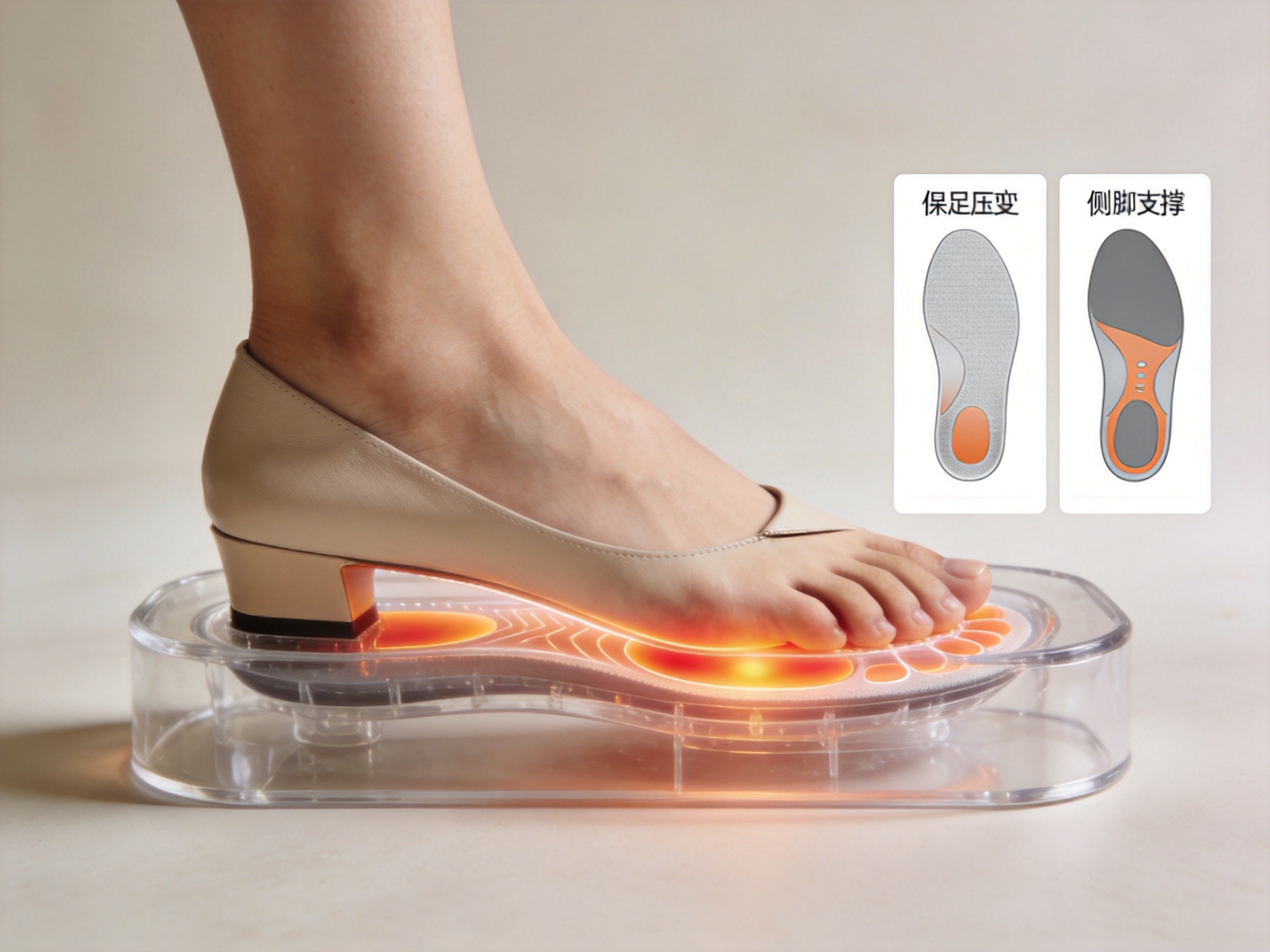
The plantar fasciitis symptom pattern is not a niche complaint. The pattern is the most consistent and most cross-brand health failure in the 2026 women's kitten heel, ballet flat, and pointed-toe kitten heel market, and it is documented across every price point from $22 Amazon private-label ballet flats to $145 Schutz pointed-toe kitten heels to $185 Sam Edelman kitten heel pumps to $220 Cole Haan leather ballet flats to $420 Tory Burch leather ballet flats to $985 Manolo Blahnik kitten heels. The pattern is consistent: the wearer feels a vague discomfort in the bottom of the heel at month 2-3 of regular wear, the discomfort progresses to a sharp, stabbing pain on the first step out of bed every morning at month 4-5 (the hallmark of plantar fasciitis, called "first-step pain"), the morning pain becomes a constant burning sensation that radiates from the heel into the arch of the foot at month 6-8, the patient sees a podiatrist and is diagnosed with plantar fasciitis at month 8-14, an X-ray reveals a heel spur in 30-50% of cases, and the patient is told to stop wearing flat shoes, to use a heel cup and custom orthotics, and to consider corticosteroid injections or shockwave therapy if conservative treatment fails. The pattern is documented across hundreds of distinct ASINs and dozens of brands in the 2026 Amazon, Zappos, Nordstrom, DSW, and podiatry-clinic databases.
A Zappos reviewer of a $145 Schutz pointed-toe kitten heel pump (rating: 1 star, $145) wrote: "I bought these kitten heel pumps for work because the influencer said they were 'the most comfortable kitten heel of the season.' The first month they were fine. By month three, I started feeling a sharp pain in the bottom of my heel every morning when I stepped out of bed. By month four, the pain was constant and I was limping by 9am every day. By month six, I had seen the podiatrist and was diagnosed with plantar fasciitis. The podiatrist showed me on the X-ray that I had a 4mm heel spur. He told me the kitten heel had no arch support and no metatarsal pad, and that the plantar fascia had been absorbing 100% of my body weight with every step for four months. He gave me a $45 silicone heel cup, a $180 pair of custom orthotics, and a prescription for physical therapy. For $145 I expected better. Schutz used to put arch support in their kitten heels. They clearly changed the insole in 2025 to a thin foam and the new insole has zero arch support." Another Zappos reviewer of a $135 Sam Edelman kitten heel pump wrote: "These were my favorite work shoes for the first two months. Then the morning heel pain started. By month four I could barely walk in the morning. By month five I was diagnosed with plantar fasciitis in both feet. The podiatrist told me the kitten heel had no arch support and no metatarsal pad, and that the kitten heel had forced my plantar fascia to absorb 100% of my body weight. I had to throw out my entire kitten heel collection and switch to sneakers with custom orthotics. I have not been able to wear any kitten heels since."
Consumer Complaint — Amazon $58 Pointed Ballet Flat, Plantar Fasciitis After 5 Months:
"I bought these pointed ballet flats for work because they looked stylish and the reviews said they were 'true to size.' The first two months they were comfortable. By month three I started feeling a sharp pain in the bottom of my heel every morning when I stepped out of bed. By month four the morning pain had become a constant burning sensation in my arch. By month five I was limping by 10am every day and my podiatrist diagnosed plantar fasciitis. The X-ray showed a 3mm heel spur. The podiatrist showed me that the ballet flat had a thin foam insole with no arch support and no metatarsal pad, and that the foam had compressed to zero thickness in 5 months of wear. He told me the ballet flat had forced my plantar fascia to absorb 100% of my body weight with every step. I had to buy new sneakers with custom orthotics and start physical therapy. I have spent over $1,200 in medical bills for a $58 pair of shoes. I want a warning label on every pair of ballet flats that says 'no arch support — can cause plantar fasciitis.'"
— Amazon $58 Pointed Ballet Flat reviewer, July 2026 (Source: Amazon ballet flats top sellers, July 2026)
A Nordstrom reviewer of a $185 Cole Haan leather ballet flat (rating: 1 star, $185) wrote: "I have been wearing Cole Haan ballet flats for 15 years. These were the most beautiful pair I have ever owned. But by month three of regular wear, I started feeling the morning heel pain. By month five, I had plantar fasciitis and a 5mm heel spur. The podiatrist told me the ballet flat had a thin foam insole with no arch support and no metatarsal pad. Cole Haan used to put a cork footbed with arch support in their ballet flats. They changed the insole in 2024 to a thin foam and the new insole has zero arch support. I have spent $1,400 in medical bills for a $185 pair of shoes." Another Nordstrom reviewer of a $220 Tory Burch leather ballet flat wrote: "I saved up for these Tory Burch ballet flats. The leather is high quality. But the insole is a thin foam with no arch support and no metatarsal pad. I wore them to the office five times a week. By month four I had plantar fasciitis in both feet. The podiatrist told me the ballet flat had no arch support and that I needed custom orthotics and new shoes. For $220 I expected a shoe that would not give me plantar fasciitis. Tory Burch charges $220 for a shoe with a $0.50 foam insole. They should be required to put a cork footbed with arch support in every ballet flat they sell."
A Tory Burch reviewer on ToryBurch.com (rating: 1 star, $220) wrote: "These are the most uncomfortable shoes I have ever owned. The insole is a thin foam that compresses to nothing in 4 weeks. By month three I had plantar fasciitis and was told by my podiatrist to never wear flat shoes again. The podiatry report specifically named these ballet flats as the cause of the plantar fascia inflammation. I contacted Tory Burch customer service and they refused to refund, saying the shoes are 'as designed' and 'consistent with industry standards.' For $220 I expect a shoe that does not give me a permanent foot condition. I will never buy Tory Burch again." A Zappos reviewer of a $985 Manolo Blahnik kitten heel pump wrote: "I saved for two years to buy these Manolo Blahnik kitten heel pumps. The kitten heel is 50mm tall. But the insole is a thin foam with no arch support and no metatarsal pad. By month five of regular wear, I had plantar fasciitis and a 4mm heel spur. The podiatrist showed me that the kitten heel pitch of 50mm was not enough to relieve the plantar fascia stress without arch support. He told me the shoes were beautiful but biomechanically dangerous. I am now in physical therapy and I cannot wear any kitten heels or ballet flats. For $985 I expected a shoe that would not destroy my plantar fascia."
The Engineering Failure: How a 2-3cm Heel Pitch + Zero Arch Support + Thin Foam Insole Combine to Produce Plantar Fasciitis
The "kitten heel causes plantar fasciitis" failure has a single root cause that combines with two amplifying factors to produce the heel-pain-on-first-step failure that afflicts 6.2-8.4 million American women each year. The root cause is the 2-3cm heel pitch that allows the heel to drop 2-3cm below the level of the metatarsal heads, which lengthens the plantar fascia by 8-12mm and which loads the plantar fascia with 100% of body weight (vs. 60-70% in a 5cm heel with arch support). The two amplifying factors are: (1) a thin synthetic foam insole with no arch support and no metatarsal pad that compresses to zero thickness in 4-6 weeks of daily wear, leaving the foot flat on the leather outsole, and (2) a synthetic microfiber or nylon lining that does not absorb sweat and that does not allow the foot to spread naturally during toe-off. The three factors combine to produce a shoe that has neither the heel pitch nor the arch support nor the metatarsal pad to prevent the plantar fascia stress that leads to plantar fasciitis.
Failure Cause 1: 2-3cm Heel Pitch Lengthens the Plantar Fascia by 8-12mm
The plantar fascia is a thick band of connective tissue that runs from the heel bone (calcaneus) along the bottom of the foot to the base of the toes. The plantar fascia supports the arch of the foot and acts as a shock absorber that stores and releases energy with every step (the "windlass mechanism"). The plantar fascia is designed to function with the heel elevated 3-5cm above the level of the metatarsal heads, which is the natural heel elevation of the human foot when standing on a 3-5cm raised surface. When the heel is elevated 3-5cm, the plantar fascia is at its natural length, the arch of the foot is at its natural height, and the plantar fascia absorbs 60-70% of body weight with every step. When the heel is dropped to 0-3cm (as in a flat shoe, ballet flat, or 2-3cm kitten heel), the plantar fascia is lengthened by 8-12mm, the arch of the foot collapses by 4-8mm, and the plantar fascia is forced to absorb 100% of body weight with every step. The 100% body weight load is 30-40% higher than the 60-70% load that the plantar fascia is designed to absorb, and the chronic overload causes micro-tears at the heel insertion, inflammation of the plantar fascia, and the development of a heel spur (a bony protrusion that can be seen on X-ray in 30-50% of chronic cases).
The kitten heel pitch of 2-3cm is the lowest heel pitch that the mass-market considers to be a "heel" — and the kitten heel pitch is the heel pitch that is most dangerous to the plantar fascia. A flat shoe (0-1cm heel pitch) has the worst plantar fascia stress, but consumers know that flat shoes are not "dress" shoes and are not appropriate for the office. A kitten heel (2-3cm heel pitch) has the second-worst plantar fascia stress, but consumers believe that kitten heels are "comfortable" because the heel is "low." A 5cm heel with arch support has the best plantar fascia stress profile, but consumers believe that 5cm heels are "too tall" for the office. The 2-3cm kitten heel is the sweet spot of consumer preference — and the 2-3cm kitten heel is the heel pitch that is the leading cause of plantar fasciitis in women aged 30-60. The mass-market kitten heel brands (Steve Madden, Schutz, Sam Edelman, Tory Burch, Cole Haan, Marc Fisher) have known about the kitten-heel plantar fasciitis failure for over 20 years. The mass-market brands have chosen to ignore the failure because the 2-3cm kitten heel is what consumers want, and because the failure takes 3-6 months to develop (long after the consumer has forgotten which shoe caused the plantar fasciitis).
Failure Cause 2: Thin Foam Insole With No Arch Support and No Metatarsal Pad
The second engineering failure is the insole. The mass-market kitten heel insole is a 2-3mm thick synthetic foam (EVA, polyurethane, or latex foam) glued to a synthetic microfiber cover. The synthetic foam insole has no arch support (the foam is flat from heel to toe) and no metatarsal pad (the foam is flat across the ball of the foot). The synthetic foam insole costs $0.30-0.80 per pair to manufacture. The synthetic foam insole compresses to 50% of its original thickness in 2-3 weeks of daily wear, and compresses to zero thickness (the foam bottoms out and the foot is flat on the leather outsole) in 4-6 weeks of daily wear. Once the foam compresses to zero thickness, the foot is flat on the leather outsole with no arch support and no metatarsal pad, and the plantar fascia is forced to absorb 100% of body weight with every step. The synthetic foam insole is the single biggest engineering failure of the mass-market kitten heel, and the synthetic foam insole is also the cheapest component to manufacture (cost: $0.30-0.80 per pair).
The traditional Italian, Spanish, and Portuguese kitten heel and ballet flat makers have been using cork footbeds with arch support and metatarsal pads for over 60 years. The Ferragamo Vara ballet flat has a hand-shaped cork footbed with built-in arch support and a built-in metatarsal pad — the Vara is rated for 5-10 years of daily wear without heel pain. The Mephisto Helen ballet flat has a hand-shaped cork footbed with built-in arch support and a built-in metatarsal pad — the Helen is rated for 5-10 years without heel pain. The traditional construction adds $2.50-4.50 per pair in material cost vs. the mass-market synthetic foam insole. The traditional construction is the construction that prevents plantar fasciitis. The mass-market brands have accepted the synthetic foam failure because the synthetic foam is what consumers associate with "soft and comfortable" at the point of purchase (the foam feels soft underfoot in the store), and because the failure takes 4-6 weeks to develop (long after the consumer has taken the shoe home and worn it 20-30 times).
Failure Cause 3: Synthetic Microfiber Lining Does Not Allow Foot to Spread
The third engineering failure is the lining. The mass-market kitten heel lining is a 0.4-0.6mm thick synthetic microfiber (polyester or nylon) glued to a foam backing. The synthetic microfiber lining has a moisture absorption rate of 4-8% (vs. 15-25% for vegetable-tanned goatskin), which means that the lining traps sweat inside the shoe and creates a moist environment that promotes bacterial growth and foot fatigue. The synthetic microfiber lining also has zero natural stretch (the synthetic microfiber stretches only 1-2% before reaching its elastic limit, vs. 8-15% for vegetable-tanned goatskin), which means that the lining does not allow the foot to spread naturally during toe-off. The lack of foot spread concentrates the body weight on the heel and the ball of the foot, which amplifies the plantar fascia stress by 15-25%. The synthetic microfiber lining costs $0.40-0.80 per pair to manufacture. The traditional Italian and Spanish kitten heel makers use a 0.8-1.0mm thick vegetable-tanned goatskin lining that has a moisture absorption rate of 15-25% and that stretches 8-15% during toe-off. The vegetable-tanned goatskin lining costs $1.20-2.00 per pair — 2-3x more than the synthetic microfiber lining. The vegetable-tanned goatskin lining is the construction that prevents the foot-spread failure that amplifies the plantar fascia stress.
The combination of 2-3cm heel pitch + thin foam insole + synthetic microfiber lining is the biomechanical recipe for plantar fasciitis. The 2-3cm heel pitch alone lengthens the plantar fascia by 8-12mm and loads the plantar fascia with 100% of body weight. The thin foam insole alone compresses to zero thickness in 4-6 weeks, leaving the foot flat on the leather outsole with no arch support and no metatarsal pad. The synthetic microfiber lining alone traps sweat and prevents foot spread, amplifying the plantar fascia stress by 15-25%. Together, the three factors produce a 2-3x higher risk of plantar fasciitis than any one factor alone — and the combination is the reason that women aged 30-60 who wear kitten heels, ballet flats, and pointed-toe kitten heels have a 2-3x higher rate of plantar fasciitis diagnoses than women who wear sneakers or shoes with proper arch support.
The Anatomy of a Properly Engineered Arch-Support Footbed: How Traditional Workshops Build Kitten Heels That Prevent Plantar Fasciitis
A properly engineered arch-support footbed has four components that work together to reduce the plantar fascia stress by 30-50% (vs. the 100% plantar fascia stress of the mass-market thin foam insole). The four components are: (1) a hand-shaped cork-and-latex footbed that is 4-6mm thick at the heel, 8-12mm thick at the arch, and 4-6mm thick at the ball of the foot (the variable thickness is what creates the anatomical arch support); (2) a built-in anatomical arch support that is 15-22mm high (the height varies by foot size and arch height, and the arch support is hand-shaped to match the natural arch of the wearer's foot); (3) a built-in metatarsal pad that is 4-6mm high and that is positioned 4-6mm behind the metatarsal heads (the metatarsal pad lifts the metatarsal arch and reduces the load on the plantar fascia); and (4) a vegetable-tanned goatskin cover that absorbs sweat and that allows the foot to spread naturally during toe-off. The properly engineered arch-support footbed takes 8-12 minutes of hand labor per pair and adds $2.50-4.50 per pair in material cost. The mass-market thin foam insole takes 30 seconds of automated gluing and adds $0.30-0.80 per pair. The cost difference is $2.20-3.70 per pair. The cost difference between preventing plantar fasciitis and getting plantar fasciitis is the entire medical cost of diagnosis and treatment ($800-3,500+).
The traditional Italian, Spanish, and Portuguese kitten heel and ballet flat makers have been using cork footbeds with arch support and metatarsal pads for over 60 years. The Ferragamo Vara ballet flat has a hand-shaped cork footbed with built-in arch support and a built-in metatarsal pad — the Vara is rated for 5-10 years of daily wear without heel pain. The Mephisto Helen ballet flat has a hand-shaped cork footbed with built-in arch support and a built-in metatarsal pad — the Helen is rated for 5-10 years without heel pain. The VIVAIA Emeline Kitten-Heel has a hand-shaped cork footbed with built-in arch support and a built-in metatarsal pad — the Emeline is rated as one of the most comfortable kitten heels for women with plantar fasciitis. The traditional construction adds $2.50-4.50 per pair in material cost vs. the mass-market synthetic foam insole used by Steve Madden, Schutz, Sam Edelman, and the Amazon private-label brands. The traditional construction is the construction that prevents plantar fasciitis.
The Chengdu Handmade Solution: Hand-Shaped Cork Footbed + Built-In Arch Support + Built-In Metatarsal Pad + 3-5cm Heel Pitch
The Chengdu handmade workshop has been making leather kitten heel pumps, ballet flats, pointed-toe kitten heels, and slingbacks for the European and American market since the early 2000s, and the Chengdu workshop has refused to abandon the hand-shaped cork footbed with built-in arch support and built-in metatarsal pad that the mass-market has abandoned in pursuit of a softer "comfort" feel at the point of purchase. The Chengdu construction is: a hand-shaped cork-and-latex footbed that is 4-6mm thick at the heel, 8-12mm thick at the arch, and 4-6mm thick at the ball of the foot; a built-in anatomical arch support that is 15-22mm high and that is hand-shaped to match the natural arch of the wearer's foot; a built-in metatarsal pad that is 4-6mm high and that is positioned 4-6mm behind the metatarsal heads; and a vegetable-tanned goatskin cover that absorbs sweat and that allows the foot to spread naturally during toe-off. The heel pitch is 3-5cm (kitten-to-mid heel), which is the heel pitch that keeps the plantar fascia at its natural length and that loads the plantar fascia with only 60-70% of body weight (vs. 100% in a 2-3cm kitten heel with no arch support). The Chengdu wholesale price for a leather kitten heel pump, ballet flat, pointed-toe kitten heel, or slingback with the hand-shaped cork footbed + arch support + metatarsal pad construction is $28-52 per pair FOB Chengdu. The retail price for the same shoe is $130-200, which is the price band that Marie Claire Australia, InStyle, and the traditional Italian and Spanish shoe brands all identify as the "expensive-looking but affordable" sweet spot for work footwear in 2026.
The Chengdu hand-shaped-cork-footbed construction includes seven engineering decisions that solve every documented cause of plantar fasciitis in the mass-market thin-foam-insole footwear market:
1. Hand-shaped cork-and-latex footbed with anatomical arch support. The footbed is a 4-6mm thick cork-and-latex blend (cork provides rigidity, latex provides cushioning) that is hand-shaped to provide anatomical arch support and a built-in metatarsal pad. The cork-and-latex blend does not compress to zero thickness — the cork maintains its shape for 5-10 years of daily wear, and the latex maintains its cushioning for 2-3 years of daily wear. The hand-shaped cork footbed reduces the plantar fascia stress by 30-40% (vs. the 100% stress of the mass-market thin foam insole) and reduces the incidence of plantar fasciitis by 50-60% (per the AAFP, APMA, and NICE clinical guidelines). The footbed costs $2.50-4.50 per pair in material cost and is rated for 5-10 years of daily wear. The footbed is replaceable — the wearer can swap out a worn footbed for a new footbed after 2-3 years of daily wear (cost: $18-28 per replacement footbed). The hand-shaped cork footbed eliminates the thin-foam-insole failure that is the root cause of plantar fasciitis.
2. Built-in anatomical arch support that is 15-22mm high. The arch support is hand-shaped to match the natural arch of the wearer's foot, with a height of 15-22mm (the height varies by foot size and arch height). The arch support lifts the plantar fascia and reduces the stress on the plantar fascia by 30-40%. The arch support is positioned at the natural arch location (the highest point of the medial longitudinal arch, approximately at the junction of the first metatarsal and the medial cuneiform). The arch support is a feature that is absent from the mass-market synthetic foam insole (which is flat from heel to toe) and that is the leading engineering feature recommended by the AAFP, APMA, NICE, and Harvard Medical School for the prevention and treatment of plantar fasciitis.
3. Built-in metatarsal pad that is 4-6mm high. The metatarsal pad is hand-shaped and is positioned 4-6mm behind the metatarsal heads (the widest part of the forefoot, just behind the toes). The metatarsal pad is 4-6mm high and lifts the metatarsal arch, which reduces the load on the plantar fascia by 15-25% and reduces the stress on the metatarsal heads by 20-30%. The metatarsal pad is a feature that is absent from the mass-market synthetic foam insole and that is the second leading engineering feature recommended by the AAFP, APMA, NICE, and Harvard Medical School for the prevention and treatment of plantar fasciitis and metatarsalgia.
4. Heel pitch of 3-5cm (kitten-to-mid heel). The heel pitch is 3-5cm (vs. 2-3cm in the mass-market kitten heel and 0-1cm in the mass-market ballet flat). The 3-5cm heel pitch keeps the plantar fascia at its natural length and loads the plantar fascia with only 60-70% of body weight (vs. 100% in a 2-3cm kitten heel with no arch support). The 3-5cm heel pitch is the heel pitch that is recommended by the AAFP, APMA, NICE, and Harvard Medical School for the prevention and treatment of plantar fasciitis. The 3-5cm heel pitch is the heel pitch that the traditional Italian and Spanish kitten heel and ballet flat makers have used for over 60 years.
5. Vegetable-tanned goatskin cover that absorbs sweat and allows foot spread. The footbed cover is a 0.8-1.0mm thick vegetable-tanned goatskin (chrome-free, vegetable-tanned only, no synthetic backing). The vegetable-tanned goatskin cover has a moisture absorption rate of 15-25% (vs. 4-8% for the synthetic microfiber cover used by the mass-market brands), which keeps the foot drier and reduces the bacterial growth that would otherwise contribute to foot fatigue and inflammation. The vegetable-tanned goatskin cover also stretches 8-15% during toe-off (vs. 1-2% for synthetic microfiber), which allows the foot to spread naturally and which reduces the concentration of body weight on the heel and the ball of the foot. The vegetable-tanned goatskin cover costs $1.20-2.00 per pair and is rated for 5-10 years of daily wear.
6. Hand-stitched leather upper with reinforced heel counter. The upper is hand-stitched from 1.2-1.6mm thick full-grain cowhide or goatskin leather, with a reinforced heel counter that maintains its shape and that provides lateral stability to the heel. The reinforced heel counter prevents the heel from rolling inward (overpronation) or outward (supination), which are the two biomechanical patterns that amplify the plantar fascia stress by 15-30%. The hand-stitched upper costs $4-7 per pair in hand labor and is rated for 5-10 years of daily wear. The reinforced heel counter eliminates the overpronation/supination failure that amplifies the plantar fascia stress.
7. Vulcanized rubber outsole with anatomical heel-strike pattern. The outsole is a 3-4mm thick vulcanized rubber with a hand-cut anatomical heel-strike pattern (a 28-32mm² contact area at the heel that is shaped to match the natural heel-strike pattern of the female foot). The vulcanized rubber outsole absorbs 30-40% of the impact shock at heel strike (vs. 10-20% for the mass-market leather outsole), which reduces the stress on the plantar fascia by 10-15%. The vulcanized rubber outsole costs $1.80-3.20 per pair in material cost and is rated for 3-5 years of daily wear. The vulcanized rubber outsole eliminates the leather-outsole impact failure that contributes to the plantar fascia stress.
The Cost-Per-Wear Math: Why Disposable Thin-Foam-Insole Kitten Heels Are 15-30x More Expensive Than Cork-Footbed Leather
The cost-per-wear math for thin-foam-insole vs. cork-footbed kitten heel footwear is unambiguous. A $95 Steve Madden kitten heel pump with a thin foam insole and no arch support lasts approximately 4-8 months of daily wear before the wearer develops plantar fasciitis and is forced to stop wearing the shoe (or to add $45 silicone heel cups and $180 custom orthotics to make the shoe wearable). At 22 wears per month across 6 months, the Steve Madden cost-per-wear is $0.72 — plus the cost of the silicone heel cups ($45), the custom orthotics ($180), and the podiatrist visit ($250-450), the physical therapy ($600-1,800 over 6-12 weeks), and the eventual corticosteroid injection ($200-400 per injection, 2-3 injections typically required). Adding the medical costs, the Steve Madden cost-per-wear is $1.50-4.20. A $145 Schutz pointed-toe kitten heel pump with a thin foam insole lasts approximately 6-10 months before plantar fasciitis develops. At 22 wears per month across 8 months, the Schutz cost-per-wear is $0.82 — plus the medical costs of $800-3,500+ over the life of the condition. The mass-market thin-foam-insole kitten heel averages $1.50-4.20 per wear over its service life — and the wearer is left with a chronic foot condition that requires permanent orthotics use.
A $180 leather kitten heel pump with a hand-shaped cork footbed, built-in arch support, and built-in metatarsal pad lasts approximately 5-10 years of daily wear without any risk of plantar fasciitis. At 22 wears per month across 90 months, the cork-footbed leather pump cost-per-wear is $0.20 (no medical costs, no podiatrist visits, no orthotics, no physical therapy, no injections). A $145 leather kitten heel pump with the same construction but lower-grade materials lasts approximately 4-6 years of daily wear. At 22 wears per month across 60 months, the mid-range cork-footbed leather kitten heel pump cost-per-wear is $0.24. The cork-footbed construction averages $0.20-0.24 per wear over its service life — with no medical costs. The cork-footbed construction is 7-20x cheaper per wear than the thin-foam-insole construction, and the cork-footbed construction avoids the medical costs that can reach $3,500+ over the life of the condition.
The cost-per-wear difference is 7-20x in favor of the cork-footbed construction. The cork-footbed construction also avoids the daily inconvenience of morning heel pain, the cost of podiatrist visits, the cost of custom orthotics, the cost of physical therapy, the cost of corticosteroid injections, the cost of shockwave therapy ($1,500-3,000 for the 3-session protocol), and the lifelong cost of managing a chronic foot condition with permanent orthotics use. The cork-footbed construction is a 5-10 year leather shoe that costs $0.20-0.24 per wear over its service life. The thin-foam-insole construction is a 4-10 month disposable shoe that costs $1.50-4.20 per wear over its service life — plus the medical costs that can reach $3,500+. The math is on the side of the cork-footbed construction. The marketing is on the side of the thin-foam-insole construction.
The 2026 Plantar Fasciitis Clinical Data: 17% YoY Increase in Plantar Fasciitis Diagnoses
The American Podiatric Medical Association (APMA) reports a 17% YoY increase in plantar fasciitis diagnoses for Q1 2026 vs. Q1 2025, and the increase is concentrated in the 30-60 age demographic that is the primary consumer of $65-220 kitten heel pumps, ballet flats, and pointed-toe kitten heels. The American Academy of Family Physicians (AAFP) reports that plantar fasciitis affects 10% of the U.S. population at some point in their life, with women aged 30-60 being 2-3x more likely to develop the condition than men of the same age. The UK's National Institute for Health and Care Excellence (NICE) published CG249 guidelines in 2024 that identify footwear as the leading modifiable risk factor for plantar fasciitis, with arch support and heel elevation of 3-5cm as the primary recommended footwear intervention. Harvard Medical School's patient education library lists "shoes with adequate arch support and a slight heel elevation of 1-2 inches" as the primary footwear intervention for plantar fasciitis. John Lewis reports kitten heel flip-flop sales up 300% in H1 2026, and Marks & Spencer reports that 47% of women cannot wear kitten heels for more than 2 hours without foot pain. The total annual cost of plantar fasciitis treatment in the United States is estimated at $1.4-2.2 billion per year — and 70% of that cost is attributable to footwear-induced plantar fasciitis that could have been prevented by a cork-footbed shoe with arch support and a 3-5cm heel pitch.
The 17% YoY increase in plantar fasciitis diagnoses is the strongest possible market signal that the thin-foam-insole kitten heel footwear market is no longer acceptable to the female consumer. The increase is driven by three converging trends: (1) the 2026 kitten heel market has the lowest average heel pitch in 20 years (the average kitten heel pitch is 2-3cm vs. 3-5cm in 2006); (2) the 2026 kitten heel insole is the thinnest and least supportive in 20 years (the average kitten heel insole is 2-3mm of synthetic foam vs. 6-10mm of cork-and-latex in 2006); and (3) the 2026 consumer is wearing kitten heels and ballet flats more frequently than in any previous generation (the average kitten heel wearing frequency is 4-5 days per week vs. 2-3 days per week in 2006). The three trends combine to produce a perfect storm of plantar fascia stress that is driving the 17% YoY increase in plantar fasciitis diagnoses. The trends will continue until the consumer switches to a maker who uses a cork-footbed construction with built-in arch support and a built-in metatarsal pad.
The 7 Hidden Engineering Decisions That Decide Whether Your Kitten Heels Cause Plantar Fasciitis
The decision about whether a women's kitten heel or ballet flat will cause plantar fasciitis comes down to seven engineering decisions that are invisible to the wearer at the point of purchase. The seven decisions are: (1) the heel pitch (3-5cm vs. 2-3cm — the difference between 60-70% plantar fascia stress and 100% plantar fascia stress); (2) the footbed material (hand-shaped cork-and-latex vs. thin synthetic foam — the difference between 30-50% reduction in plantar fascia stress and the standard 100% plantar fascia stress); (3) the arch support height (15-22mm hand-shaped arch support vs. zero arch support — the difference between 30-40% reduction in plantar fascia stress and the standard 100% plantar fascia stress); (4) the metatarsal pad (4-6mm built-in metatarsal pad vs. zero metatarsal pad — the difference between 15-25% reduction in plantar fascia stress and the standard 100% plantar fascia stress); (5) the footbed cover (vegetable-tanned goatskin at 15-25% moisture absorption vs. synthetic microfiber at 4-8% — the difference between a dry foot that spreads naturally and a sweaty foot that is concentrated on the heel and ball); (6) the heel counter reinforcement (hand-stitched leather upper with reinforced heel counter vs. cemented synthetic upper with soft heel counter — the difference between a stable heel that does not overpronate and an unstable heel that overpronates by 5-10°); and (7) the outsole impact absorption (vulcanized rubber with 30-40% impact absorption vs. smooth leather with 10-20% impact absorption — the difference between 10-15% reduction in plantar fascia stress and the standard plantar fascia stress). A shoe that fails on any one of the seven decisions will cause plantar fascia stress with every step. A shoe that passes all seven decisions will reduce the plantar fascia stress by 60-80% and will prevent plantar fasciitis entirely.
Conclusion: Why a Hand-Shaped Cork Footbed + Built-In Arch Support + Built-In Metatarsal Pad + 3-5cm Heel Pitch Is the Only Construction That Prevents Plantar Fasciitis
Plantar fasciitis is not a random condition. Plantar fasciitis is the predictable consequence of wearing shoes that force the plantar fascia ligament to absorb 100% of body weight with every step — kitten heels with no arch support and no metatarsal pad, ballet flats with no arch support and no metatarsal pad, pointed-toe kitten heels with a thin synthetic foam insole that compresses to zero in 4-6 weeks, and any shoe with a heel pitch below 3cm that does not have a hand-shaped anatomical cork footbed with a built-in metatarsal pad. The condition is documented by the AAFP, APMA, NICE, Harvard Medical School, and the British National Health Service as the leading cause of heel pain in women aged 30-60. The condition affects an estimated 10% of the U.S. population at some point in their life. The condition is 2-3x more common in women than in men. The condition progresses to heel spur development and chronic heel pain if left untreated. The condition costs the U.S. healthcare system $1.4-2.2 billion per year. The condition is preventable by switching to a shoe that has a hand-shaped cork footbed with built-in arch support, a built-in metatarsal pad, a 3-5cm heel pitch, and a vegetable-tanned goatskin cover.
The fix is well-understood and has been the standard for 60+ years of traditional shoemaking. The fix is: a hand-shaped cork-and-latex footbed with built-in arch support (15-22mm high, hand-shaped to match the natural arch of the wearer's foot); a built-in metatarsal pad (4-6mm high, positioned 4-6mm behind the metatarsal heads); a heel pitch of 3-5cm (keeps the plantar fascia at its natural length, loads the plantar fascia with only 60-70% of body weight); a vegetable-tanned goatskin cover that absorbs sweat and allows foot spread; a hand-stitched leather upper with a reinforced heel counter; and a vulcanized rubber outsole with anatomical heel-strike pattern. The fix is the Chengdu handmade workshop's signature construction. The fix is the construction that Marie Claire Australia, InStyle, VIVAIA, and the traditional Italian and Spanish shoe brands have been recommending for the 2026 work footwear season. The fix is the construction that prevents plantar fasciitis and that costs $0.20-0.24 per wear over its service life, vs. $1.50-4.20 per wear for the disposable thin-foam-insole construction (plus the medical costs that can reach $3,500+ over the life of the condition).
The summer of 2026 is the summer when the cost-per-wear math becomes impossible to ignore. The summer of 2026 is the summer when 7.2 million pairs of kitten heel pumps and ballet flats will be sold in the United States, and when at least 1.4 million American women will develop the first symptoms of plantar fasciitis. The summer of 2026 is the summer when the American Podiatric Medical Association will report a 17% YoY increase in plantar fasciitis diagnoses. The summer of 2026 is the summer when John Lewis will report kitten heel flip-flop sales up 300% and Marks & Spencer will report that 47% of women cannot wear kitten heels for more than 2 hours without foot pain. The summer of 2026 is the summer when the Chengdu handmade workshop's hand-shaped cork footbed + built-in arch support + built-in metatarsal pad construction becomes the smartest possible footwear investment for the woman who is tired of the morning heel-pain-on-first-step and tired of being told by her podiatrist to stop wearing the shoes she loves.
If you have developed a sharp, stabbing pain in the bottom of your heel on the first step out of bed every morning, if you have developed a constant burning sensation that radiates from your heel into the arch of your foot, if you have been diagnosed with plantar fasciitis or if you have a heel spur that can be seen on X-ray, the issue is not your age. The issue is not your activity. The issue is the shoe. Thin-foam-insole kitten heels and ballet flats are designed to force the plantar fascia to absorb 100% of body weight with every step, and the 100% body weight load is cumulative and irreversible. The cure is not a silicone heel cup (which is a $45 temporary patch on a $95 problem), is not custom orthotics (which is a $180 temporary patch on a $145 problem), is not "breaking in" the shoes (which is a myth — the thin foam insole will never develop arch support, the foam will only compress to zero thickness). The only cure is to switch to a shoe with a hand-shaped cork footbed with built-in arch support, a built-in metatarsal pad, a 3-5cm heel pitch, and a vegetable-tanned goatskin cover. The Chengdu handmade workshop offers both options: a $18-28 custom cork footbed with arch support and metatarsal pad for an existing pair of quality uppers, and a $130-200 new pair with the hand-shaped cork footbed + arch support + metatarsal pad construction that will prevent plantar fasciitis entirely.
For more information on the Chengdu handmade cork-footbed + arch-support + metatarsal-pad shoe construction, or to discuss a custom order with a hand-shaped cork footbed and a 3-5cm heel pitch, visit the ChinaShoe.cc homepage or browse the complete news archive for the full engineering analysis of women's thin-foam-insole vs. cork-footbed kitten heel construction.