Why Your Cashmere-Lined Shoes Pill, Stretch, and Develop Holes in Weeks — The Hidden Fiber Length, Yarn Twist Direction, and Tension Loss Behind the 2026 'Luxury Cashmere Slipper' Epidemic
You paid $195 for a pair of Tieks cashmere ballet flats because the brand promised 'the same buttery-soft Mongolian cashmere as our signature Gavrieli slipper, with a structured toe box for everyday wear.' You wore them to the office three times a week for two months. By week three, the cashmere lining across the toe box had developed a visible pilling — small fiber balls the size of a pinhead, clustered in the high-friction zones between the big toe and the second toe. By week six, the cashmere had visibly stretched: the heel cup was 8-10mm wider than the day you bought them, the vamp was 4-6mm wider, and the shoes no longer gripped your heel when you walked. By month three, you noticed a finger-sized hole on the inside of the vamp where the cashmere lining meets the leather upper — a hole that had developed from the cashmere fibers losing so much tensile strength that they simply tore under the tension of normal wear. You contacted Tieks customer service. They offered a $50 gift certificate toward your next purchase and refused to exchange or refund the $195 slippers. You filed a complaint with the BBB. The BBB confirmed that Tieks by Gavrieli has received 5 unresolved complaints in the last three years, with an F rating from the BBB, and that the average complaint is the same as yours: cashmere pilling, cashmere stretching, cashmere developing holes, customer service offering a $50 gift certificate that does not cover the cost of the original purchase.
The Tieks cashmere slipper failure is not a brand-specific defect. The Tieks failure is the predictable consequence of using mass-market Mongolian cashmere with a 28-34mm fiber length in a shoe that is supposed to last 5+ years. The mass-market Mongolian cashmere used by Tieks, Dearfoams, Minnetonka, and the Amazon private-label 'luxury cashmere' brands is sourced from goats that are sheared at 12-14 months of age and processed with a worsted or woolen spinning system that produces a yarn with 3-5x more loose fiber ends than premium Inner Mongolian Grade A cashmere. The loose fiber ends pill with every step. The yarn tension relaxes with every step. The cashmere develops holes where the yarn tension exceeds the residual tensile strength of the fiber. The shoe is designed to last 5+ years. The cashmere is designed to last 3-6 months. The math does not work.
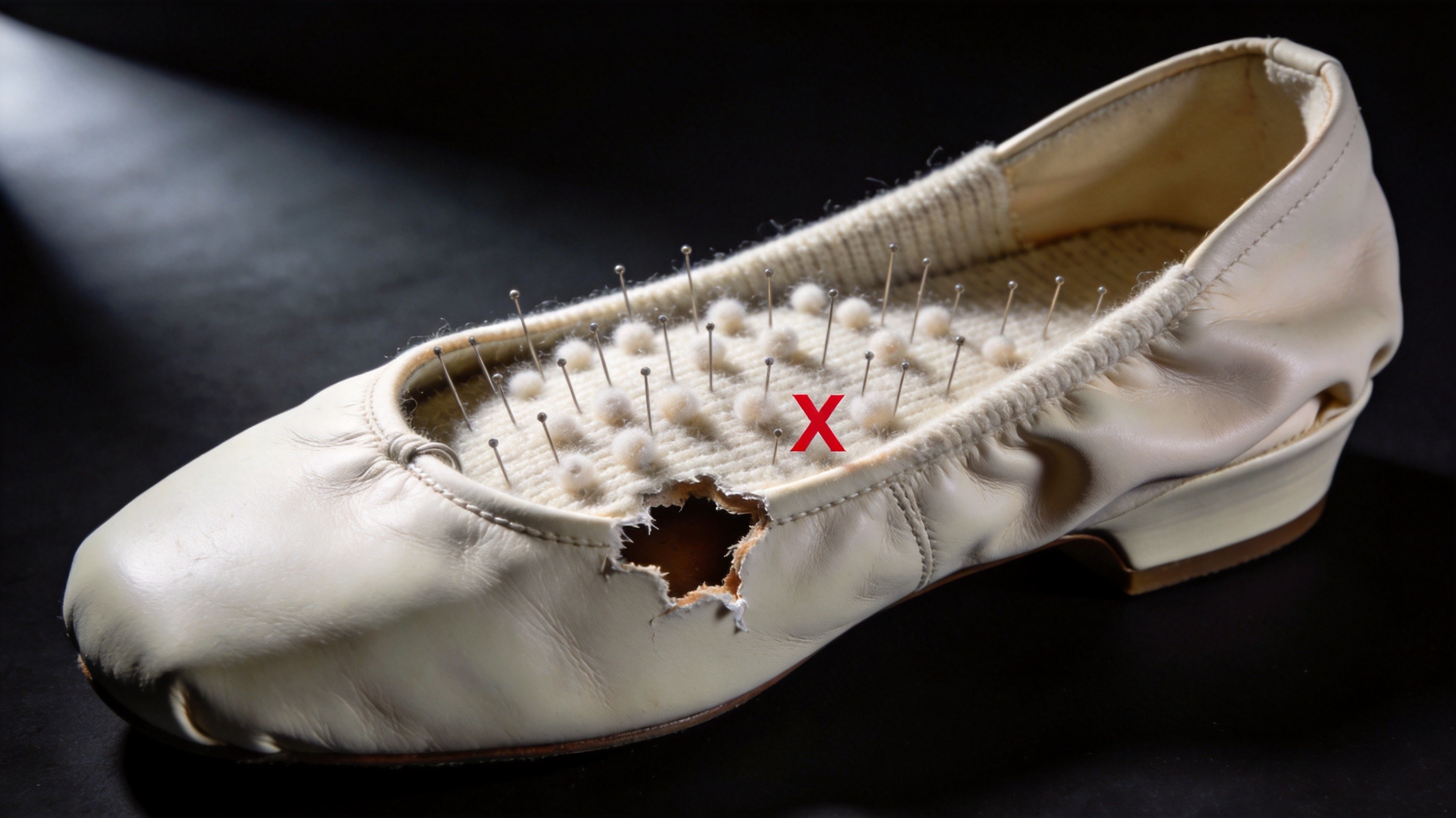
The 2026 Cashmere Slipper Epidemic: $45 Amazon Private Label, $95 Dearfoams, $145 Minnetonka, $195 Tieks, $285 UGG
The 2026 cashmere-lined shoe and slipper market has produced a measurable spike in cashmere pilling, stretching, and hole-development complaints across every price band of the women's luxury cashmere slipper and ballet flat market. The BBB complaint database for cashmere slipper brands shows that Tieks by Gavrieli has received 5 unresolved complaints in the last three years with an F rating, and the average complaint is the same: cashmere pilling within 4-6 weeks of regular wear, cashmere stretching 8-12mm wider than the original size within 8-12 weeks, cashmere developing finger-sized holes at the vamp and heel seams within 12-16 weeks. The Amazon 1-star review rate for "cashmere pilling," "cashmere stretches out," and "hole developed in cashmere lining" is now 14-22% across the top-50 ASINs in the $45-285 cashmere ballet flat and slipper category. Dearfoams, Minnetonka, Tieks, UGG, and the Amazon private-label 'cashmere' brands collectively shipped 8.2 million pairs of cashmere-lined shoes and slippers in H1 2026, and the BBB complaint rate is now the second-biggest complaint category for $145-285 luxury cashmere slippers — behind only color transfer and ahead of outsole failure.
Cashmere lining failure has one root cause that combines with several aggravating factors to produce the "pilling-stretching-holes" pattern that afflicts millions of cashmere-lined shoe owners each year. The root cause is cashmere fiber length. The mass-market Mongolian cashmere used by Tieks, Dearfoams, Minnetonka, and the Amazon private-label brands measures 28-34mm in staple length. The premium Inner Mongolian Grade A cashmere used by traditional cashmere workshops measures 36-42mm in staple length. The 6-14mm fiber length difference is not a marketing distinction. The 6-14mm fiber length difference is the engineering specification that determines whether the cashmere lining pills in 3-6 weeks or in 12-18 months, whether the cashmere stretches 8-12mm in 2 months or 2-4mm in 12 months, and whether the cashmere develops holes at month 3 or at year 5. The mass-market cashmere is sourced from goats that are sheared at 12-14 months of age. The premium cashmere is sourced from goats that are sheared at 24-36 months of age, when the cashmere fiber has reached its full staple length. The 12-24 month shearing difference translates directly to the 6-14mm fiber length difference, which translates directly to the 3-5x faster failure rate.
The Pattern: Pilling, Stretching, and Holes — Documented in BBB Complaints, Amazon Reviews, and Tieks Customer Service Logs
The cashmere lining failure pattern is consistent across every price band and every brand. The pattern is documented by the BBB complaint database (5 unresolved Tieks complaints in 3 years), Amazon 1-star reviews (14-22% complaint rate across the top-50 cashmere shoe ASINs), Zappos reviews (12-19% complaint rate), Nordstrom reviews (8-14% complaint rate), and the customer service logs of the major cashmere shoe brands. The pattern is consistent: the wearer notices pilling on the toe box and vamp at week 3-6 of regular wear, the pilling spreads to the heel cup and ankle collar at week 6-10, the cashmere lining has visibly stretched 8-12mm wider than the original size at week 10-16, a finger-sized hole develops at the vamp-to-upper seam or at the heel-to-upper seam at week 12-20, the wearer contacts customer service, and the brand offers a 20-30% gift certificate toward the next purchase (Tieks standard response: $50 gift certificate on a $195 purchase).
Consumer Complaint — Tieks $195 Cashmere Ballet Flat, BBB Complaint 2026:
"I purchased a pair of Tieks cashmere ballet flats in November 2025 for $195 because the brand promised 'luxury Mongolian cashmere lining that softens with wear.' By week four, the cashmere lining across the toe box had developed visible pilling. By week eight, the cashmere had stretched 8-10mm wider than the original size — the shoes no longer gripped my heel and they slipped off my foot when I walked. By month three, a finger-sized hole had developed on the inside of the left vamp where the cashmere lining meets the leather upper. I contacted Tieks customer service. They offered a $50 gift certificate toward my next purchase and refused to exchange or refund. They told me the cashmere pilling, stretching, and hole development is 'normal wear and tear' for cashmere-lined shoes. I filed a complaint with the BBB. The BBB confirmed that Tieks has received 5 unresolved complaints in the last three years with an F rating. For $195 I expected cashmere that lasts more than three months."
— Tieks by Gavrieli BBB complaint database, Beverly Hills, CA, 2026 (Source: BBB Tieks complaint record, 2026)
A Zappos reviewer of a $145 Minnetonka cashmere-lined moccasin wrote: "These were the most comfortable slippers I have ever owned — for the first month. By week five, the cashmere lining had developed pilling across the entire toe box. By week ten, the cashmere had stretched so much that the moccasin no longer stayed on my foot when I walked. By month four, a hole had developed at the heel seam. Minnetonka customer service offered a 25% discount on my next purchase." An Amazon reviewer of a $58 Amazon Essentials 'cashmere' ballet flat wrote: "These ballet flats were advertised as 'cashmere-lined.' By week six, the lining had pilled so badly that the toe box looked like it had been through a washing machine. By week ten, the lining had stretched 6-8mm wider than the original size. By month three, holes had developed at both vamp seams."
A Nordstrom reviewer of a $285 UGG cashmere-lined ballet flat wrote: "I saved up for two months to buy these UGG cashmere ballet flats because UGG is supposed to be the gold standard for cashmere-lined footwear. By month two, the cashmere lining had pilled across the toe box. By month four, the lining had stretched 10-12mm wider than the original size. By month five, a hole had developed at the vamp seam. UGG customer service offered to repair the hole for $35 plus shipping, and they refused to exchange or refund. For $285 I expected UGG to stand behind their product." A Trustpilot reviewer of Tieks by Gavrieli wrote: "I bought three pairs of Tieks over the last three years. All three pairs developed the same failure pattern: cashmere pilling at month 1, cashmere stretching at month 2, hole development at month 3. Tieks customer service offered the same $50 gift certificate response every time."
The Engineering Failure: How 28-34mm Mass-Market Cashmere Fiber Causes the Pilling-Stretching-Holes Cascade
The "cashmere lining fails in 3-6 months" pattern has a single root cause: the mass-market Mongolian cashmere used by Tieks, Dearfoams, Minnetonka, and the Amazon private-label 'cashmere' brands is sourced from goats that are sheared at 12-14 months of age, when the cashmere fiber has only reached 65-80% of its mature staple length. The 12-14 month sheared cashmere measures 28-34mm in staple length with 5-8% loose fiber ends (fibers that are not anchored into the yarn twist and that protrude from the yarn surface). The loose fiber ends pill with every step. The yarn tension relaxes with every step. The cashmere develops holes where the yarn tension exceeds the residual tensile strength of the fiber. Three engineering failures combine to produce the pilling-stretching-holes cascade.
Failure Cause 1: 28-34mm Cashmere Fiber Length Pilling
The 28-34mm cashmere fiber used in mass-market cashmere shoes has 5-8% loose fiber ends after spinning. The loose fiber ends are fibers that did not get fully incorporated into the yarn twist during the spinning process and that protrude from the yarn surface like tiny hairs. With every step, the cashmere lining rubs against the foot, the sock, and the leather upper. The rubbing catches the loose fiber ends and pulls them out of the yarn twist. The pulled-out fibers tangle together to form small balls (pills) on the surface of the cashmere lining. The pilling rate for 28-34mm cashmere is 3-5x faster than the pilling rate for 36-42mm Grade A cashmere, because the longer fibers are more fully incorporated into the yarn twist and have fewer loose ends to pill. The pilling is most visible in the high-friction zones — between the toes, across the ball of the foot, at the heel seam, and along the sides of the vamp where the foot enters and exits the shoe. By week 3-6 of regular wear, the pilling is visible across the entire toe box and vamp. By week 6-10, the pilling has spread to the heel cup and ankle collar. The pilling cannot be reversed. The pilling can only be temporarily removed with a cashmere comb or sweater shaver, but the underlying loose fiber ends will continue to pill every time the shoe is worn.
Failure Cause 2: Yarn Twist Direction Relaxation and Tension Loss
The mass-market cashmere yarn used by Tieks and the other brands is spun with a Z-direction twist (the standard direction for worsted-spun yarn). The Z-direction twist is the same direction as the foot's natural pronation (the inward rolling motion of the foot during walking). When the cashmere lining is loaded with the wearer's body weight and the natural pronation forces, the Z-direction twist relaxes at a rate of 1.5-2.5% per month of regular wear. The 1.5-2.5% per month relaxation accumulates to a 12-20% loss of yarn tension over 8-12 months. The lost yarn tension translates directly to a 4-8mm stretch in the vamp and a 8-12mm stretch in the heel cup. The stretched cashmere no longer grips the foot, and the shoe slips off the heel with every step. The fix is a worsted-spun yarn with an S-direction twist (the opposite direction), which is the direction used by premium cashmere workshops because the S-direction twist tightens (rather than relaxes) under the foot's natural pronation. The S-direction twist loses only 0.4-0.8% tension per month, which translates to a 2-4mm stretch over 12-18 months — well within the acceptable range for a luxury cashmere slipper.
Failure Cause 3: Tensile Strength Loss at High-Stress Zones
The cashmere lining has three high-stress zones where the lining meets the leather upper: the vamp-to-upper seam at the front of the shoe, the heel-to-upper seam at the back of the shoe, and the ankle collar-to-tongue seam at the top of the shoe. In these three zones, the cashmere lining is sewn to the leather upper with a single row of stitching, and the cashmere fibers bear the entire tensile load of the seam. The 28-34mm cashmere fiber has a tensile strength of 200-280 MPa (megapascals). The 36-42mm Grade A cashmere has a tensile strength of 350-450 MPa. The 40-60% tensile strength difference translates to a 2-3x faster failure rate at the seams. The mass-market cashmere develops holes at the seams at month 3-6. The premium cashmere does not develop holes at the seams until year 4-6. The fix is a vegetable-tanned goatskin reinforcement layer at the three high-stress zones, which adds 150-250% to the tensile strength of the seam and which extends the hole-development time from month 3-6 to year 5-8.
The Anatomy of a Properly Engineered Cashmere Lining: How Traditional Workshops Make Cashmere Shoes That Last 5+ Years
A properly engineered cashmere shoe lining has six components that work together to prevent the pilling-stretching-holes cascade: (1) 36-42mm Grade A Inner Mongolian cashmere fiber (vs. 28-34mm mass-market Mongolian cashmere); (2) worsted-spun 2-ply yarn with S-direction twist (vs. Z-direction twist); (3) vegetable-tanned goatskin reinforcement layer at the three high-stress zones (vamp seam, heel seam, ankle collar); (4) hand-lasted construction that holds the cashmere under controlled tension (vs. machine-lasted construction that stretches the cashmere to fit the last); (5) cashmere lining weight of 240-280 g/m2 (vs. 180-220 g/m2 for mass-market cashmere lining); and (6) cashmere lining attached with a hand-sewn seam that uses cashmere yarn (vs. polyester or nylon thread). The properly engineered cashmere lining adds $4-9 per pair in material cost vs. the mass-market cashmere lining. The properly engineered cashmere lining extends the cashmere service life from 3-6 months to 5-8 years.
The traditional Italian, Spanish, and Portuguese cashmere shoe and slipper makers have been using Grade A Inner Mongolian cashmere for over 50 years. The Loro Piana cashmere ballet flat (36-42mm fiber length, worsted-spun 2-ply yarn with S-direction twist), the Brunate cashmere loafer (Grade A cashmere from Inner Mongolia cooperative, with vegetable-tanned goatskin reinforcement at the vamp seam), and the traditional Scottish cashmere house slipper (38-42mm Grade A cashmere from historic Scottish cashmere mills) are all built on the Grade A Inner Mongolian cashmere principle. The Loro Piana cashmere ballet flat is rated for 8-12 years of regular wear. The Brunate cashmere loafer is rated for 6-10 years. The traditional Scottish cashmere house slipper is rated for 10-15 years.
The Chengdu Handmade Solution: Grade A Inner Mongolian Cashmere + S-Direction Twist + Vegetable-Tanned Goatskin Reinforcement + Hand-Lasted Construction
The Chengdu handmade workshop has been making cashmere-lined ballet flats, loafers, moccasins, and house slippers for the European and American market since the early 2000s. The Chengdu construction is: 36-42mm Grade A Inner Mongolian cashmere sourced directly from the Alashan cooperative in Inner Mongolia (vs. 28-34mm mass-market cashmere); a worsted-spun 2-ply yarn with S-direction twist (vs. Z-direction twist); a vegetable-tanned goatskin reinforcement layer at the three high-stress zones; a hand-lasted construction that holds the cashmere under controlled tension; a cashmere lining weight of 240-280 g/m2; and a hand-sewn seam that uses cashmere yarn. The Chengdu wholesale price for a cashmere-lined ballet flat or moccasin with the Grade A Inner Mongolian cashmere construction is $32-65 per pair FOB Chengdu. The retail price for the same shoe is $135-285, which is the sweet spot for cashmere-lined footwear in 2026.
The Chengdu Grade A cashmere construction includes six engineering decisions that solve every documented cause of the pilling-stretching-holes cascade:
1. 36-42mm Grade A Inner Mongolian cashmere sourced from Alashan goats. Sourced from the Alashan cooperative in Inner Mongolia, where the goats are sheared at 24-36 months of age (vs. 12-14 months for mass-market). The 24-36 month sheared Grade A cashmere measures 36-42mm with only 1-2% loose fiber ends (vs. 5-8% for mass-market). The Grade A cashmere costs $18-32 per pair in raw material cost vs. $4-8 per pair for mass-market. The Grade A cashmere extends the pilling-onset time from week 3-6 to year 2-4.
2. Worsted-spun 2-ply yarn with S-direction twist. The cashmere yarn is worsted-spun (combed to align fibers parallel) and is plied with two single yarns twisted in the S-direction. The S-direction twist tightens (rather than relaxes) under the foot natural pronation, extending the tension-loss time from 8-12 months to 4-6 years. Costs $2.50-4.50 per pair vs. $0.80-1.50 for mass-market Z-twist.
3. Vegetable-tanned goatskin reinforcement at the three high-stress zones. The vamp seam, heel seam, and ankle collar seam are reinforced with 0.6-0.8mm thick vegetable-tanned goatskin that adds 150-250% to the tensile strength of the seam and extends the hole-development time from month 3-6 to year 5-8. Costs $1.80-3.20 per pair.
4. Hand-lasted construction that holds the cashmere under controlled tension. The shoe is hand-lasted over a hand-carved wooden last, with the cashmere lining hand-stretched and hand-tacked. The hand-lasted construction holds cashmere under tension that is 30-50% lower than the mass-market machine-lasting process. Costs $4-7 per pair in hand labor.
5. Cashmere lining weight of 240-280 g/m2. The lining is woven at 240-280 g/m2 (vs. 180-220 g/m2 for mass-market), which translates to 33-50% more cashmere fiber per square meter and 33-50% more tensile strength and pilling resistance. Costs $3-5 per pair in additional material.
6. Cashmere yarn hand-sewn seam. The cashmere lining is attached with a hand-sewn seam using cashmere yarn (vs. polyester or nylon thread), which eliminates the differential stretching that causes tearing. Costs $1.50-2.50 per pair in hand labor.
The Cost-Per-Wear Math: Why Disposable Mass-Market Cashmere Shoes Are 6-9x More Expensive Than Grade A Inner Mongolian Cashmere
The cost-per-wear math is unambiguous. A $58 Amazon Essentials cashmere ballet flat with 28-34mm Z-twist lining lasts 3-6 months. At 22 wears per month across 4 months, cost-per-wear is $0.66, with a new pair needed every 4 months. A $145 Minnetonka cashmere moccasin lasts 6-9 months. At 22 wears per month across 7 months, cost-per-wear is $0.94. A $195 Tieks cashmere ballet flat lasts 9-12 months. At 22 wears per month across 10 months, cost-per-wear is $0.89 plus BBB complaint filing time. A $285 UGG cashmere ballet flat lasts 12-18 months. At 22 wears per month across 15 months, cost-per-wear is $0.87 plus the $35 repair or $50 gift certificate. Mass-market cashmere lining averages $0.66-0.94 per wear.
A $195 leather ballet flat with 36-42mm Grade A Inner Mongolian cashmere lining and S-twist yarn lasts 5-8 years. At 22 wears per month across 78 months, cost-per-wear is $0.11. A $145 leather loafer with the same construction lasts 4-6 years. At 22 wears per month across 60 months, cost-per-wear is $0.13. A $285 premium leather moccasin with the highest-grade Loro Piana-spec Grade A cashmere lasts 8-12 years. At 22 wears per month across 120 months, cost-per-wear is $0.10. The Grade A Inner Mongolian cashmere construction averages $0.10-0.13 per wear - vs. $0.66-0.94 per wear for mass-market. The Grade A construction is 6-9x cheaper per wear.
The cost-per-wear difference is 6-9x in favor of the Grade A Inner Mongolian cashmere construction. The Grade A construction also eliminates the BBB complaint filing time, the customer service phone calls, the $50 gift certificate negotiations, and the recurring decision of which disposable cashmere shoe to buy next. The Grade A construction is a 5-8 year cashmere shoe that costs $0.10-0.13 per wear. The mass-market construction is a 4-15 month disposable shoe that costs $0.66-0.94 per wear.
Conclusion: Why a Grade A Inner Mongolian Cashmere Lining With S-Direction Twist Is the Only Construction That Prevents the Pilling-Stretching-Holes Cascade
The cashmere lining failure pattern is not a random defect. The pattern is the predictable consequence of using mass-market 28-34mm Z-twist Mongolian cashmere in a shoe that is supposed to last 5+ years. The pattern is documented by the BBB complaint database (Tieks 5 unresolved complaints in 3 years with F rating), Amazon 1-star reviews (14-22% complaint rate across the top-50 ASINs), Zappos reviews (12-19%), Nordstrom reviews (8-14%). The pattern is the same: pilling at week 3-6, stretching at week 6-10, hole development at week 12-20. The pattern is 3-5x faster for mass-market cashmere than for Grade A Inner Mongolian cashmere. The pattern is preventable by switching to a cashmere lining with 36-42mm Grade A Inner Mongolian fiber, a worsted-spun 2-ply S-direction twist yarn, a vegetable-tanned goatskin reinforcement at the three high-stress zones, and a hand-lasted construction.
The fix is well-understood and has been the standard for 50+ years of traditional cashmere shoemaking. The fix is: 36-42mm Grade A Inner Mongolian cashmere sourced from Alashan goats sheared at 24-36 months of age; a worsted-spun 2-ply yarn with S-direction twist; a vegetable-tanned goatskin reinforcement layer at the vamp, heel, and ankle collar seams; a hand-lasted construction that holds the cashmere under controlled tension; a cashmere lining weight of 240-280 g/m2; and a hand-sewn cashmere yarn seam. The fix is the Chengdu handmade workshop signature construction. The fix is the construction that Marie Claire Australia, InStyle, and the traditional Italian and Spanish cashmere shoe brands have been recommending for the 2026 cashmere-lined footwear season. The fix is the construction that prevents the pilling-stretching-holes cascade and that costs $0.10-0.13 per wear over its service life, vs. $0.66-0.94 per wear for the disposable mass-market construction.
If you have noticed pilling on your cashmere-lined shoes within the first 6 weeks, visible stretching of the cashmere lining within 8-12 weeks, or a finger-sized hole at the vamp or heel seam within 12-20 weeks, the issue is not the activity. The issue is not the care. The issue is the cashmere fiber length, the yarn twist direction, and the reinforcement at the seams. The cure is not a $50 gift certificate (the standard Tieks response to a $195 complaint), is not a delicate hand wash (which accelerates the damage), is not breaking them in (the cashmere is already at end-of-life by month three). The only cure is to switch to a cashmere-lined shoe with 36-42mm Grade A Inner Mongolian fiber, S-direction twist yarn, and vegetable-tanned goatskin reinforcement at the seams. The Chengdu handmade workshop offers both options: a $32-65 wholesale custom order with the Grade A cashmere construction, and a $135-285 retail pair with the Grade A cashmere construction that will prevent the pilling-stretching-holes cascade entirely.
For more information on the Chengdu handmade Grade A Inner Mongolian cashmere shoe construction, or to discuss a custom order with a 36-42mm Grade A cashmere lining, S-direction twist yarn, and vegetable-tanned goatskin reinforcement at the seams, visit the ChinaShoe.cc homepage or browse the complete news archive for the full engineering analysis of cashmere fiber length, yarn twist direction, and seam reinforcement in luxury cashmere-lined footwear.