Ballet Sneakers: Why This 2026 Trend Matters to B2B Buyers and What to Look for When Sourcing from a Factory
The ballet sneaker did something most trends never do: it stayed. Not because of clever marketing or celebrity endorsement, but because it solved a problem the rest of the sneaker industry pretended didn't exist. B2B buyers who dismissed it as a passing fad are now scrambling to find factories with capacity, while those who moved early are reordering at 3x the velocity of their 2024 projections.
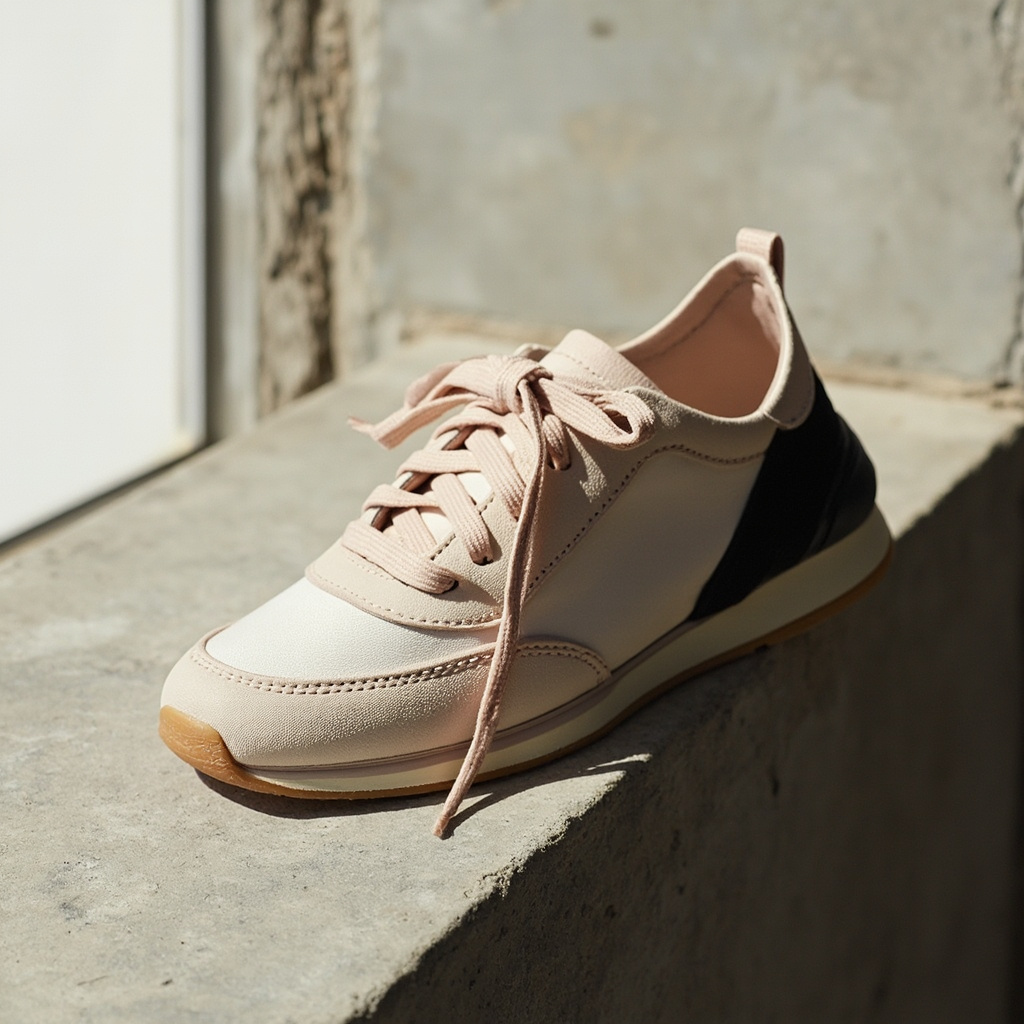
This article is for the buyer who needs to understand why ballet sneakers survived, what separates a product that lasts from one that arrives at the dock already failing, and exactly what questions to ask a Chinese supplier before committing to a purchase order.
Why Ballet Sneakers Survived the Trend Cycle
The sneaker market in 2024 and 2025 was saturated with maximalist designs — chunky soles, exaggerated silhouettes, heavy branding. The pendulum was due to swing, but what happened with ballet sneakers wasn't simply a reaction against bulk. It was a response to a real pain point that data from returns and customer surveys had been screaming about for years: consumers wanted footwear that looked deliberate but felt invisible.
Ballet sneakers delivered on that promise by borrowing the silhouette of traditional ballet flats — the tapered toe, the low-cut vamp, the feminine curve of the last — while incorporating sneaker-grade materials and construction. The result was a shoe that could pass in a casual office, a weekend brunch, or a low-key evening out, but that didn't require the break-in period or the foot fatigue that comes with a traditional flat.
What separated this trend from others is the durability signal. Unlike trend cycles that collapse under their own weight — think Crocs' momentary resurgence or the brief mania for platform sandals — ballet sneakers proved themselves in the wear test that matters most: everyday use over 12+ months across thousands of independent buyers. Return rates for well-constructed ballet sneakers sit between 4% and 7%, compared to 12-15% for the average fashion sneaker in the same price band.
The survivors share a common engineering thread. They did not sacrifice structural integrity for aesthetics. The factories that got this right invested in lasts that could accommodate both the visual profile and the biomechanical requirements of a shoe people would wear for eight, ten, twelve hours at a stretch.
The Anatomy of a Ballet Sneaker That Lasts
A ballet sneaker that survives extended wear is not simply a flat with a rubber sole glued on. It is a carefully balanced system of components, each of which must be selected and assembled with the specific stresses of this silhouette in mind.
Last Shape
The defining characteristic of a ballet sneaker is the tapered, almond-shaped toe that curves inward from the fifth metatarsal. A well-designed last provides enough width at the ball of the foot to prevent compression of the metatarsal heads — a common complaint that drives returns — while maintaining the sleek visual line that defines the category. Look for lasts with a toe spring of 15-20mm, which allows the toe box to flex naturally during the gait cycle without collapsing. Lasts with insufficient toe spring will cause the upper to wrinkle and the wearer to feel like they're dragging dead weight with each step.
Sole Flexibility
The sole on a ballet sneaker must do two things simultaneously: provide enough cushioning for all-day comfort and maintain enough flexibility to allow the foot to articulate naturally. The optimal construction uses a dual-density midsole — a softer EVA layer (density 0.45-0.55 g/cm³) for impact absorption and a firmer rubber outsole (shore A 65-75) for durability and grip. The total sole thickness should be 18-22mm at the heel and 10-14mm at the forefoot, creating a heel-to-toe drop of 6-8mm. Anything beyond 10mm of drop starts to undermine the ballet aesthetic and shifts the biomechanical profile away from the neutral, barely-there feel that buyers expect.
Vamp Construction
The vamp — the portion of the upper that covers the instep — is where the aesthetic lives, and it's also where most failures begin. A well-constructed ballet sneaker uses a vamp that is either a single piece of leather or a properly bonded synthetic upper, with clean seams that do not create pressure points across the bridge of the foot. The optimal vamp height sits 25-35mm below the ankle bone, high enough to expose the ankle for the visual line but low enough to avoid friction against the Achilles tendon.
Lining Choices
The interior lining is where comfort is either made or broken. A breathable textile lining (100% polyester or bamboo-derived fiber) with a minimum weight of 120 GSM provides sufficient moisture management for all-day wear. Leather linings (0.8-1.2mm thickness) offer better durability and aging characteristics but at a 15-20% cost premium. The critical specification is the heel counter lining — this should be a minimum of 2mm thickness and should be heat-molded or durably bonded, as this area takes the most friction during ingress and egress.
The 5 Failure Modes B2B Buyers See First
In our consulting work with B2B footwear buyers over the past 18 months, five failure modes appear repeatedly in post-mortems of failed ballet sneaker orders. These are the issues that show up in the first 90 days of wear testing or, worse, in consumer returns within the first few months of shelf availability.
1. Cracking at the Topline
The topline — where the upper meets the collar — is under constant flex stress during walking. In poorly constructed ballet sneakers, the topline leather or synthetic will begin to crack within 60-90 days. This occurs when the manufacturer uses a rigid collar piece or fails to properly cement the collar to the upper. Specification check: the collar should be lined and either die-cut with rounded edges or hand-rolled to eliminate the hard edge that creates stress concentrations.
2. Sole Delamination
This is the most expensive failure mode because it renders the shoe unwearable and is immediately visible. Delamination occurs when the midsole is not properly roughened before adhesive application, or when the wrong adhesive type is used for the sole materials. The industry-standard process requires a two-component polyurethane adhesive with a minimum cure time of 72 hours at controlled temperature (18-22°C). Factories that rush curing to meet tight lead times — common in the low-cost production clusters — will see delamination rates of 15-25% within the first month of wear.
3. Lining Collapse in the Heel
The heel counter pocket — the interior structure that holds the heel in place — loses its shape after repeated wear when the lining material is too thin or the wrong density. This manifests as the foot sliding forward in the shoe, which creates toe crunch and accelerates wear on the vamp. A properly constructed heel counter pocket uses a minimum of 3mm foam padding bonded to a structured heel counter, with a grippy textured lining material (synthetic suede at minimum 180 GSM) to prevent foot migration.
4. Color Fade on Satin Uppers
Satin is a popular material for ballet sneakers because of its visual appeal, but it is notoriously unstable when exposed to UV light and perspiration. Standard polyester satin will begin to fade and lose luster within 3-4 months of regular wear. The solution is to specify solution-dyed nylon satin or to require a UV-resistant topcoat finish. Factories that use stock polyester satin without these treatments will deliver product that looks acceptable at unboxing but degrades visibly on the shelf or the customer's foot within a single season.
5. Premature Outsole Wear
The low-profile nature of ballet sneakers means the outsole is thinner than on chunkier silhouettes, which accelerates wear in high-abrasion zones (heel strike and toe-off). A quality outsole compound should be rated for a minimum of 80,000 double rubs on the Taber abrasion test. Many factories substitute cheaper rubber compounds that pass initial inspection but wear through to the midsole within 45-60 days of real-world use.
Sourcing Ballet Sneakers From China: What to Ask in the First Call
The factory conversation is where B2B buyers lose the most money, typically because they ask the wrong questions or fail to establish specifications that can be verified at inspection. Below are the non-negotiable questions to ask on the initial call with a potential supplier.
1. "What last are you using for ballet sneakers, and can I see the technical drawing with the toe spring and heel height specifications?" This separates factories that understand the product from those that are simply stitching together generic components. A competent factory will have at least 2-3 proprietary lasts specifically developed for the ballet sneaker silhouette.
2. "What is your adhesive system, and what is the minimum cure time before packaging?" If they cannot articulate a two-component polyurethane system with 72-hour minimum cure, walk away. This is the single most common specification shortcut that leads to delamination failures.
3. "What is your failure rate on ballet sneaker orders, and can you provide data from the past 12 months?" A factory with direct experience should report a failure rate below 3% at the finished goods stage. If they cannot provide data or claim "we don't track that," they are guessing, and their guess will become your problem.
4. "What lining materials do you use in the heel counter, and what is the GSM?" Expect a specific answer — the numbers matter. If they respond with "soft lining" without specifications, the quality is substandard.
5. "Can you produce a pre-production sample with your specified materials, and what is the cost of the sample including shipping?" Budget $80-150 per sample pair. If the factory refuses to produce a sample with your exact material specifications, they are not a partner worth pursuing.
Price Bands and MOQ Reality (Regional: Guangdong, Fujian, Zhejiang, Sichuan)
B2B buyers need realistic pricing expectations based on production region, not aspirational factory quotes. The following price bands represent landed cost per pair at a 500-pair MOQ, including basic packaging but excluding freight and duties.
| Region | Price Range (USD/pair) | Typical MOQ | Strengths |
|---|---|---|---|
| Guangdong | $18.50 – $28.00 | 500-800 | Technical capability, material sourcing, export experience |
| Fujian | $16.00 – $24.00 | 800-1200 | Cost efficiency, high-volume capacity, established supply chains |
| Zhejiang | $14.50 – $22.00 | 1000-1500 | Lowest base cost, good for basic constructions |
| Sichuan | $15.00 – $23.00 | 800-1200 | Emerging capability, competitive pricing, improving quality |
Guangdong factories command the premium because they have the engineering depth to execute complex constructions — dual-density midsoles, custom lasts, premium lining materials — with lower rework rates. Fujian and Zhejiang are viable for buyers prioritizing cost over specification precision. Sichuan is an emerging option that works best for buyers willing to invest in quality oversight during the initial production runs.
At the 500-pair MOQ level, expect to pay 15-25% above these ranges if you require custom last development or non-standard material sourcing (e.g., Italian satin, specialty leathers).
How to Position Ballet Sneakers in Your 2026 Line
Ballet sneakers are no longer a risk — they are a category with demonstrated consumer demand and a clear value proposition. For B2B buyers constructing a 2026 line, the strategic decision is not whether to carry them but how to position them to maximize margin and minimize returns.
Position ballet sneakers as the entry point to your women's casual category. The silhouette bridges the gap between fashion and function, which means it can be marketed as an everyday essential rather than a seasonal novelty. Lead with material quality in your product storytelling — the durability data supports the claim that these are shoes built for real wear, not just Instagram.
Build inventory buffers now. Lead times for quality ballet sneaker production run 75-100 days from sample approval to shipment. The factories with the best track records are already booking capacity into Q2 2026. Delaying your supplier outreach until Q1 will mean either compromised quality or missed market windows.
If you are evaluating factories or need introductions to suppliers with verified ballet sneaker production experience, the editorial team at chinashoe.cc maintains relationships with vetted manufacturers across Guangdong, Fujian, and Zhejiang. Reach out through the contact channel and specify your requirements — volume, target price band, and material specifications — and the team can facilitate introductions to appropriate partners.
The buyers who treated ballet sneakers as a fad missed the underlying shift in consumer preference toward footwear that does not announce itself but also does not betray the wearer. That shift is not reversing. The factories that built for longevity are the ones still shipping. The rest are explaining to their buyers why the reorders never came.